2026 Best Cell Equipment Suppliers for Global Buyers

Choosing the right cell equipment supplier in 2026 requires more than comparing prices or machine catalogs. Global buyers need dependable systems that support stable production, measurable quality, and responsible expansion.

As battery technology changes, equipment must handle different formats, chemistries, and production volumes. Professor Shirley Meng has stated, “There is no one-size-fits-all solution for batteries.” That principle also applies to manufacturing equipment. A compact cylindrical-cell line may suit one factory, while another needs flexible equipment for prismatic or pouch cells.

This guide evaluates leading cell equipment suppliers through practical purchasing criteria. These include coating uniformity, assembly precision, formation performance, automation depth, data traceability, energy consumption, and after-sales support. Supplier experience matters. So does the evidence behind it.

Look closely at factory acceptance tests, sample results, spare-parts access, and technician response times. A polished demonstration is not enough. Buyers should ask how equipment performs after twelve months of daily operation.

Reliability is rarely dramatic.

It appears in small details: stable electrode tension, clean welds, repeatable stacking, and accurate temperature control. Still, no ranking can remove every risk. Local labor skills, site conditions, supply-chain limits, and changing regulations may alter the final decision.

The following supplier overview aims to support informed comparisons. It recognizes established manufacturers, emerging specialists, and the uncomfortable gaps between marketing claims and production reality. The best partner is not always the largest one. It is the supplier that can prove consistent results, communicate honestly, and improve alongside the buyer.

2026 Best Cell Equipment Suppliers for Global Buyers

Market Context: Global Battery Demand Surpassed 1 TWh in 2024 (IEA)

2026 Best Cell Equipment Suppliers for Global Buyers

Global battery demand surpassed 1 TWh in 2024, according to the International Energy Agency. That milestone changes how buyers should evaluate cell equipment suppliers. Demand is no longer a distant forecast. It is visible in larger factories, tighter delivery schedules, and stronger pressure on production yield. The best supplier is not always the largest. A reliable partner should demonstrate stable coating, accurate stacking, controlled formation, and documented process capability. Factory acceptance tests should use realistic materials and target speeds, not only ideal samples.

Practical supplier reviews often reveal small details that affect months of production. Ask for maintenance records, spare-parts response times, software access, and operator training plans. Check whether the equipment supports your cell format, chemistry, humidity limits, and future capacity changes. Energy use also matters. A dry room or formation system can quietly increase operating costs. Site references are valuable, but they require careful verification. A successful installation in one region may not transfer perfectly to another workforce or utility system. No shortlist is perfect. Some performance claims need deeper testing.

Tips: Request sample data before signing. Define yield and uptime clearly. Inspect critical assemblies in person. Keep technical promises in the contract. Leave room for improvement.

Equipment Map: Mixing, Coating, Calendering, Assembly, Formation, and Testing

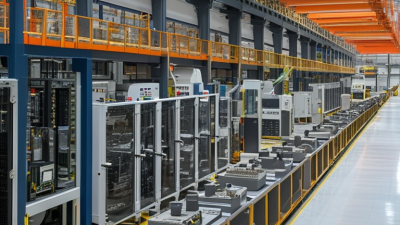
For global cell buyers in 2026, an equipment map should follow the complete production route. Mixing systems must disperse active materials evenly, while controlling temperature, viscosity, and moisture. Small variations can later become weak points in the cell. Coating equipment needs accurate slurry delivery and stable web tension. Uneven edges waste material. Calendering then adjusts electrode density, thickness, and porosity. Excessive pressure may improve density but restrict ion movement. This balance is easy to underestimate.

Assembly equipment must protect alignment, cleanliness, and separator integrity. Stacking or winding errors can appear minor but affect safety and output consistency.

Formation equipment requires precise current, voltage, temperature, and aging control. Testing systems should measure capacity, resistance, leakage, dimensions, and visual defects.

A supplier may offer impressive specifications, yet integration problems can remain. I have seen excellent machines perform poorly when software, fixtures, and factory utilities were not matched carefully.

Tips: Ask suppliers for traceable trial data using materials close to your own. Check calibration records and maintenance access. Request sample-based coating and calendering results, not only catalog numbers. Confirm whether testing equipment supports your required cell format and production volume. Leave room for process learning. Early assumptions are often wrong. A practical acceptance plan should include repeatability tests, operator training, spare-part availability, and documented response times. Local service capacity also matters when a production line stops unexpectedly.

Supplier Geography: China Held About 80% of Cell Output in 2024 (IEA)

In 2026, global buyers evaluating cell equipment suppliers should study geography as carefully as machine specifications. The International Energy Agency reported that China held about 80% of global cell output in 2024. That concentration affects equipment ecosystems, production knowledge, component access, and technical support.

China’s manufacturing depth can offer practical advantages. Buyers may find experienced integrators, established process engineers, and shorter communication paths between equipment makers and cell factories. A coating line, formation system, or inspection unit often requires precise coordination. Small timing errors can create visible defects, such as uneven electrode coating or unstable testing results. Factory visits still matter. Online presentations cannot reveal every maintenance weakness.

However, geography should not become the only selection rule. A supplier outside China may provide valuable regional service, local training, or stronger logistical flexibility. Buyers should check installation records, spare-parts lead times, software documentation, and safety certifications. Ask for measured data from comparable production conditions. Request clear acceptance criteria.

The cheapest quotation is rarely the complete cost. Think beyond delivery. A delayed replacement part can leave a production line silent for days. That risk deserves a written plan. Supplier concentration also creates resilience concerns, even when quality is strong. My assessment may be incomplete because regional capacity changes quickly. Buyers should refresh supplier data before each investment decision, rather than relying on a fixed 2024 picture.

2026 Best Cell Equipment Suppliers for Global Buyers — Supplier Geography: China Held About 80% of Cell Output in 2024 (IEA)
Buyer-oriented screening table for lithium-ion battery cell manufacturing equipment. The comparison focuses on supplier geography, process coverage, export suitability, and qualification priorities rather than company or brand names.
Supplier Geography 2024 Manufacturing Position Core Equipment Coverage Typical Cell Formats Supported Key Strengths for Global Buyers Recommended 2026 Buyer Priority Essential Qualification Checks
China Accounted for approximately 80% of global battery cell production in 2024, according to the International Energy Agency. Electrode coating Roll pressing Slitting Winding Stacking Formation Testing Cylindrical, prismatic, and pouch cells, subject to the selected production line configuration. Broadest equipment ecosystem, strong integration between process steps, extensive installed-base experience, and competitive manufacturing economics. Highest priority for full-line sourcing and high-volume projects Verify process yield, local service coverage, spare-parts availability, software compatibility, export documentation, and acceptance-test results from comparable cell chemistries.
South Korea A major established battery manufacturing base with extensive experience in automated cell production and overseas plant deployment. High-speed assembly Automation Formation Inspection Production software Cylindrical, prismatic, and pouch cells, depending on the production program and equipment architecture. Strong automation engineering, mature quality-control practices, process traceability, and experience with multinational production standards. High priority for automation-intensive and quality-critical projects Check equipment availability for the required cell format, integration with factory execution systems, maintenance response time, and compatibility with local safety regulations.
Japan A mature battery technology and precision-manufacturing base with long-standing experience in advanced production equipment. Precision coating Dry-room systems Inspection Precision assembly Laboratory equipment Primarily cylindrical and pouch formats, with capabilities varying by equipment specialization. High precision, process stability, strong measurement capability, and suitability for pilot lines or demanding research-to-production programs. Priority for precision, pilot-scale, and advanced-process applications Confirm throughput economics, customization lead time, operator-training requirements, and whether the equipment can be scaled from pilot production to mass production.
European Union A growing regional battery manufacturing and equipment base supported by industrial policy, local-content objectives, and new cell-production investments. Dry-room technology Factory automation Quality inspection Recycling interfaces Energy systems Prismatic, pouch, and cylindrical formats, depending on the factory design and local production program. Strong compliance support, proximity to European projects, engineering services, and alignment with regional environmental and safety requirements. High priority for Europe-based factories and regulated supply chains Assess conformity documentation, CE-related requirements, cybersecurity controls, energy consumption, environmental reporting, and local after-sales support.
United States A rapidly expanding battery manufacturing market supported by domestic investment, supply-chain localization, and incentives for North American production. Automated assembly Formation Testing Material handling Factory integration Cylindrical, prismatic, and pouch formats, depending on the selected vehicle, stationary-storage, or specialty-cell program. Strong demand for local commissioning, digital manufacturing integration, worker safety, and compliance with North American project requirements. High priority for domestic-content and North American service requirements Review local installation capacity, service-level agreements, cybersecurity, worker-safety compliance, import classification, and availability of replacement components.
Southeast Asia An expanding manufacturing location for batteries and related components, supported by industrial relocation, regional supply-chain development, and growing electric-mobility demand. Module and pack assembly Cell assembly Testing Material handling Factory utilities Mainly prismatic and cylindrical formats, with pouch-cell capability available for selected projects. Competitive project costs, access to regional manufacturing networks, and suitability for phased capacity expansion. Priority for regional assembly, localization, and scalable capacity projects Confirm technician availability, humidity and temperature control, utility stability, port logistics, training plans, and the supplier's regional spare-parts inventory.
India An emerging battery manufacturing and equipment market with growing policy support for domestic electric mobility, energy storage, and localized production. Cell assembly Pack assembly Testing Pilot lines Material handling Cylindrical and prismatic formats are commonly considered for new projects; final selection depends on application and cell design. Potential for staged investment, local market access, and flexible equipment configurations for early commercial production. Selective priority for pilot lines and first-phase domestic capacity Evaluate supplier commissioning experience, local technical support, environmental controls, grid reliability, operator training, and future upgrade paths.
Data and interpretation notes: The approximately 80% China share refers to global battery cell production in 2024 as reported by the International Energy Agency. The regional capability descriptions are market-screening guidance, while buyer-priority ratings are procurement recommendations rather than audited market-share rankings. Final supplier selection should be based on process qualification, demonstrated yield, total cost of ownership, service capability, regulatory compliance, and production-line acceptance testing.

Buyer Scorecard: Yield, OEE, Throughput, Uptime, Safety, and Service

For global buyers, the 2026 best cell equipment suppliers should be judged by measurable production results. A polished presentation is not enough. Request trial data from comparable materials, cycle times, and product tolerances. Yield shows how much usable output reaches inspection. Ask for defect definitions, sample sizes, and rejected-unit records. Small samples can mislead. We learned that the hard way.

OEE combines availability, performance, and quality, but suppliers should explain every calculation. Throughput must reflect actual operating conditions, not ideal laboratory settings. Check hourly output during changeovers, cleaning, and routine maintenance. Uptime claims need service logs, spare-parts access, and realistic recovery times. One quiet line can hide repeated short stops. Watch the downtime screen.

Safety deserves equal weight. Review guarding, emergency controls, operator access, training materials, and documented risk assessments. Ask whether the equipment supports safe maintenance without awkward workarounds. Service quality often decides long-term value. Evaluate remote response times, technician coverage, training depth, warranty limits, and software support. Speak with users who have operated similar systems for at least one year. Their complaints may reveal more than a demonstration. Our first scorecard gave service only ten percent, which now seems careless. A supplier with slightly lower throughput may deliver better lifetime output through faster support and steadier uptime. Keep evidence attached to every score. Recheck assumptions after installation.

2026 Best Cell Equipment Suppliers for Global Buyers

Buyer Scorecard: Yield, OEE, Throughput, Uptime, Safety, and Service

The anonymous benchmark uses a normalized 0–100 score against common industrial purchasing targets: yield ≥98%, OEE ≥85%, stable throughput, uptime ≥99%, low recordable incident exposure, and rapid technical response. Higher scores indicate stronger buyer-side performance potential.

2026 Due Diligence: FAT, ISO 9001, Warranty, Spare Parts, and TCO

For global cell-equipment buyers, due diligence should begin with Factory Acceptance Testing, not brochures. FAT should verify throughput, yield-related controls, recipe repeatability, alarm logic, safety functions, and data export. Ask for raw test records, not only a signed checklist. A three-day trial may expose sensor drift, but it will not prove twelve-month stability.

ISO 9001 is useful evidence of controlled processes, yet certification alone cannot guarantee reliable equipment. The ISO Survey 2023 reported more than 1.2 million ISO 9001 certificates worldwide. That scale shows the standard’s importance, but also its limitation. Audit the supplier’s change-control records, calibration system, nonconformance history, and technician training. Warranty terms need equal attention. Confirm response times, excluded parts, labor coverage, software support, and performance remedies. Vague wording becomes expensive during commissioning.

Tips: Request a spare-parts matrix with lead times and storage conditions. Model total cost of ownership across energy, consumables, maintenance, downtime, training, and upgrades. Deloitte’s 2024 Smart Manufacturing and Operations Survey found that manufacturers expect smart operations to improve productivity and competitiveness, but implementation risks remain significant. Use that warning practically. Compare five-year costs, not purchase prices. A low quote can conceal import delays or proprietary components. I have seen buyers overvalue initial savings. That mistake is easy to repeat. Suppliers should also disclose FAT failure procedures and commissioning acceptance thresholds before any contract is signed.

chevron-down