What is the Best Cell Culture System for Researchers?
Choosing the right cell culture system is crucial for researchers aiming for successful experiments. Dr. Emily Carter, a leading expert in cellular biology, once stated, "The choice of a cell culture system can significantly impact the outcome of your research." This highlights the importance of selecting a system that meets specific research needs.
Different cell culture systems offer unique advantages and drawbacks. Some researchers may choose traditional 2D cultures for their simplicity, while others may opt for advanced 3D cultures that better mimic in vivo conditions. Choosing the wrong system could lead to misleading results. Researchers must weigh their options carefully.
Furthermore, the evolving nature of cell culture technologies poses challenges. New systems emerge regularly, and it can be overwhelming to keep up with them. A thoughtful approach to selecting a cell culture system is essential. Each system has its strengths and limitations, which require careful consideration. Understanding these factors is vital for meaningful and reproducible research outcomes.

Overview of Cell Culture Systems in Research
Cell culture systems play a crucial role in modern scientific research. They allow scientists to maintain and manipulate cells outside their natural environment. This versatility is essential for a variety of applications such as drug discovery, disease modeling, and regenerative medicine. Researchers often face challenges in selecting the right system. Factors like cell type, growth conditions, and experimental goals significantly influence the choice.
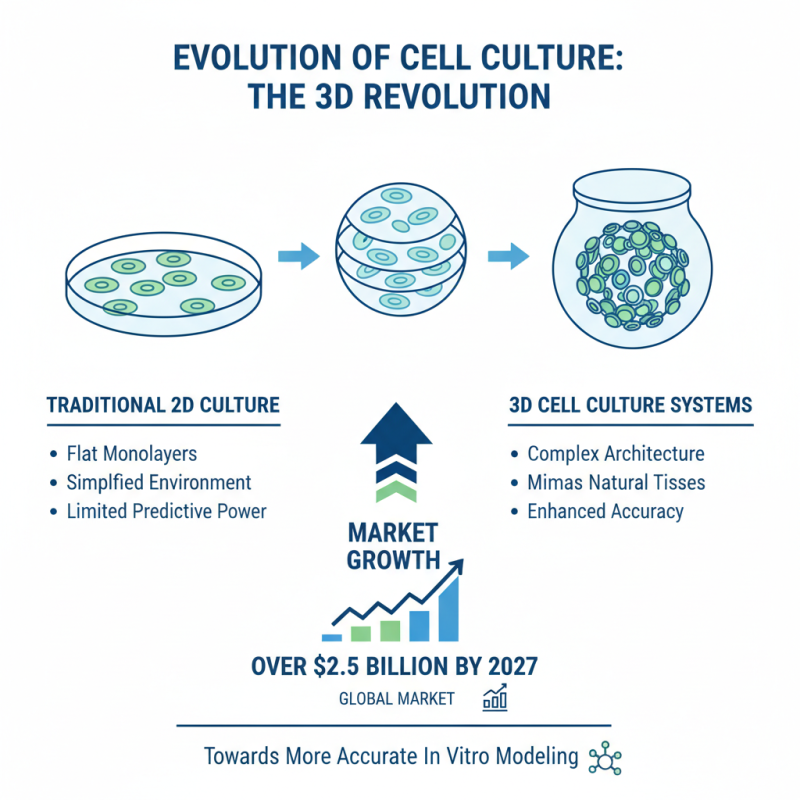
There are primarily two categories: 2D and 3D culture systems. Traditional 2D systems are widely used due to their simplicity. They provide a flat surface for cells, making observation straightforward. However, they lack the complexity of the native tissue environment. This can lead to discrepancies in cell behavior. On the other hand, 3D systems offer a more realistic model. They better mimic the tissue architecture but can be technically demanding.
Researchers must reflect on their specific needs. Cost, ease of use, and scalability are vital considerations. Not all systems are suitable for every type of research. Some might experiment with hybrid approaches to maximize benefits. This process often reveals areas needing improvement. Understanding the limitations of each system is crucial for better outcomes in research.
Overview of Popular Cell Culture Systems
Key Characteristics of Effective Cell Culture Systems
Choosing an effective cell culture system is crucial for researchers. An ideal system should provide a supportive environment for cell growth. It must mimic the natural conditions of cells. Key characteristics include nutrient availability and waste removal. Cells thrive when they receive proper nutrition. Accurate pH and temperature control is necessary too.
Scalability is another essential feature. Researchers often need to expand their cultures. A good system should support both small-scale and large-scale needs. Flexibility in culture conditions is also important. Different cells have unique requirements. A one-size-fits-all approach rarely works.
While many systems offer these traits, challenges remain. Contamination is a persistent threat. Even minor lapses can lead to significant issues. Regular monitoring is essential. Additionally, not all systems accommodate all cell types. This limitation needs careful consideration. Researchers must remain vigilant in selecting the right system. Adaptation and refinement are key to success.
Comparative Analysis of Common Cell Culture Methods
Cell culture is vital in biological research. Different methods serve various purposes. Traditional two-dimensional (2D) cultures are widely used. They offer simplicity and cost-effectiveness. However, they often fail to mimic the in vivo environment accurately. A report from the National Institutes of Health highlights that over 70% of drug candidates fail due to inadequate models. This underlines the need for more realistic systems.
Three-dimensional (3D) cultures are gaining attention. They maintain cell-cell interactions better than 2D. Research by the Journal of Biotechnology shows that 3D cultures can enhance drug response predictions by up to 40%. Despite these advantages, challenges remain. The cost of 3D systems can be prohibitive for some labs. Moreover, technical expertise is necessary to master these platforms.
Microfluidic devices represent another innovative approach. They allow precise control of the culture environment. Studies suggest that these systems can simulate tissue-like conditions. However, the complexity can be daunting for researchers with limited resources. Each method has pros and cons. Careful consideration is crucial in choosing the right system for specific research goals.
Factors Influencing the Choice of Cell Culture System
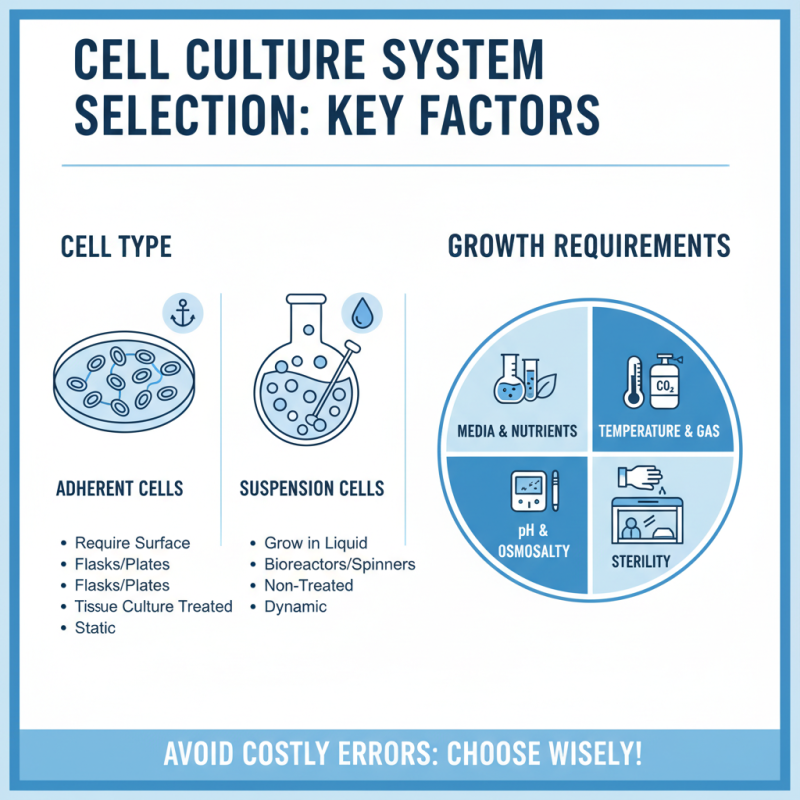
When selecting a cell culture system, researchers face multiple factors that shape their decision. One crucial aspect is the type of cells being used. Adherent versus suspension cells have different requirements. For instance, adherent cells need a surface to grow on. Suspension cells thrive in liquid media. Understanding these needs can help avoid costly errors later in the research.
Another factor is nutrient availability. Not all media provide the same essential nutrients. A recent report indicated that over 60% of researchers alter their media formulations to match specific study needs. This fine-tuning can enhance cell growth and viability. However, some researchers may struggle to replicate these conditions consistently. Variability in results often leads to frustration.
Cost also plays a role. A study showed that the budget for cell culture can vary significantly. Institutions may have limited funding, pushing researchers to opt for less expensive options, which may compromise cell performance. Balancing cost and quality is a frequent challenge. Hence, researchers must reflect on the long-term implications of their cell culture choices. Seeking the best system is often more complex than it seems.
Emerging Trends in Cell Culture Technologies
Cell culture technologies are evolving rapidly. Researchers are increasingly adopting 3D cell culture systems. These systems better mimic the natural environment of tissues. A report from Market Research Future indicates that the global 3D cell culture market is expected to grow significantly, reaching over $2.5 billion by 2027. This growth reflects a shift towards more accurate in vitro modeling.
Another emerging trend is the use of organ-on-a-chip technology. This innovative approach allows researchers to study human physiology more effectively. By integrating microfluidics with living cells, these systems simulate real organ functions. Reports suggest that the organ-on-a-chip market could surpass $1 billion in the next few years. However, challenges remain. Developing standardized protocols is crucial for reliable results. As these technologies advance, ethical considerations also demand attention.
In addition, the rise of bioprinting technology enables the creation of complex tissue structures. Researchers can lay down cells in precise patterns, potentially revolutionizing regenerative medicine. Yet, achieving vascularization in printed tissues poses significant obstacles. This area needs more exploration to realize its full potential. Overall, while emerging trends offer exciting opportunities, researchers must remain cautious and critical of their limitations.