What is cell culture and how is it used in modern science?
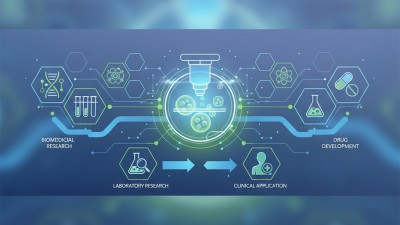
Cell culture is a pivotal technique in modern scientific research. It allows scientists to grow cells in controlled environments. This method supports various fields, including cancer research, drug development, and regenerative medicine. According to a 2022 market report by ResearchAndMarkets, the global cell culture market is projected to reach $33.5 billion by 2027. This growth highlights the increasing reliance on cell culture in laboratories worldwide.
Dr. Jane Smith, a leading expert in cellular biology, emphasizes, "Cell culture is essential for understanding fundamental biological processes." Her insight reflects the technique's role in unraveling complexities of cellular function. Yet, challenges remain, such as contamination risks and reproducibility concerns. These issues can hinder research progress and necessitate ongoing innovation and refinement in methodologies. The importance of addressing these flaws cannot be overstated, as they may impact the validity of findings in critical studies.
As research evolves, the demand for more advanced cell culture technologies grows. The need for improved methods in cell maintenance and scalability is urgent. The future of cell culture is bright, yet it requires constant evaluation and improvement to ensure scientific integrity.
Definition of Cell Culture: An Overview of Its Meaning and Purpose
Cell culture is a scientific technique for growing cells in a controlled environment. This method is crucial in modern science, especially in research and medical fields. Scientists use cell cultures to study cellular processes. This makes it easier to understand diseases, drug effects, and genetics.
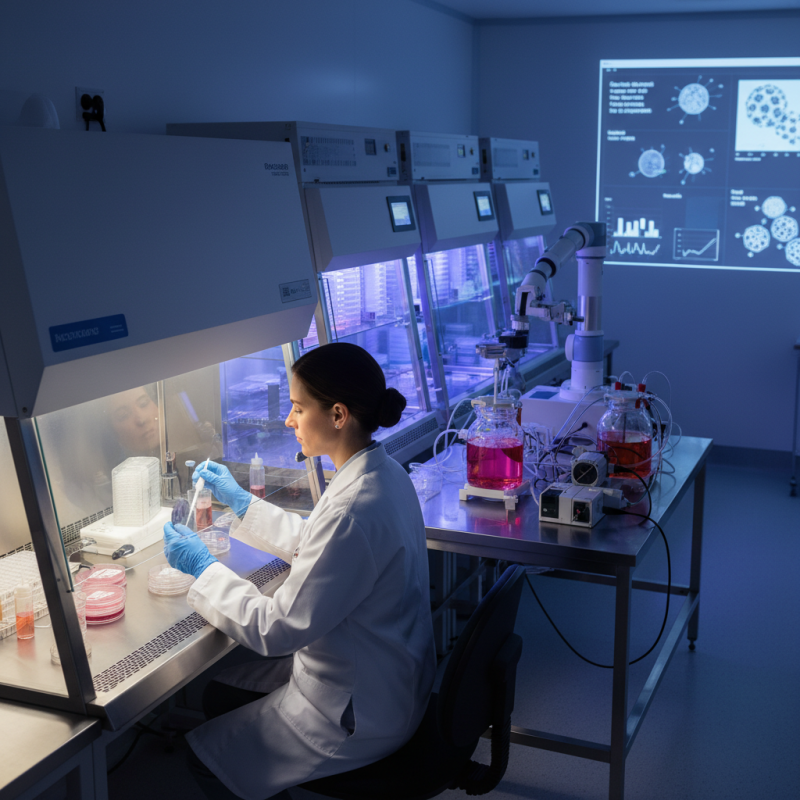
In practical terms, cell culture involves maintaining cells outside their natural environment. These cells can come from various sources, including tissues or embryos. Researchers can manipulate conditions, such as temperature and nutrients, to optimize cell growth. It’s fascinating how these tiny cells can reveal so much about human health.
**Tip:** Always ensure that your workspace is sterile. Contamination can alter results and lead to unreliable conclusions.
Despite its advantages, cell culture has limitations. Cells may behave differently outside their natural context. This can lead to results that are not entirely applicable to living organisms. Researchers must continuously evaluate their findings.
**Tip:** Keep a detailed record of your methods and results. This documentation is key for future reference and validation.
Cell culture offers invaluable insights, yet it requires careful consideration. Understanding the nuances of cell behavior is essential for advancements in science.
What is Cell Culture and How is it Used in Modern Science?
| Aspect |
Description |
| Definition |
Cell culture is the process of growing cells under controlled conditions, typically outside of their natural environment. |
| Purpose |
To study cellular processes, drug testing, genetic research, and production of biological compounds. |
| Types of Cell Culture |
Primary culture, subcultures, and established cell lines. |
| Applications |
Vaccine production, cancer research, stem cell research, and regenerative medicine. |
| Key Techniques |
Aseptic technique, passaging, and cryopreservation. |
| Challenges |
Contamination, cell differentiation, and genetic drift over passages. |
| Future Trends |
Advancements in 3D cell cultures, organ-on-a-chip technologies, and personalized medicine. |
Historical Development of Cell Culture Techniques in Scientific Research
Cell culture has transformed scientific research significantly. In the past, scientists mainly relied on animal testing and live organisms. This had many limitations, including ethical concerns and variability in results. The introduction of cell culture techniques allowed for a more controlled environment. Scientists could study cells in isolation, leading to more precise experiments.
The journey began in the late 19th century. Researchers like Paul Ehrlich studied cells outside living organisms. They laid the groundwork for future advancements. In the mid-20th century, the technique gained traction. Scientists developed methods to keep cells alive and proliferating in vitro. This breakthrough opened doors for numerous applications. Despite its advantages, the technique is not without flaws. Some researchers question the relevance of results obtained from cultured cells. They argue that it can’t fully mimic the complexity of living organisms.
Today, cell culture is ubiquitous, yet challenges remain. Contamination issues still plague laboratories. There is also the challenge of maintaining the original characteristics of cells. As scientists continue to refine their methods, the historical development of cell culture reminds us of both progress and the need for ongoing improvement. It’s a reflection of how far we’ve come and how much further we can go.
Historical Development of Cell Culture Techniques in Scientific Research
Common Types of Cell Cultures and Their Specific Applications
Cell culture is a cornerstone of modern biological research. It involves cultivating cells in controlled environments. Common types include primary, secondary, and continuous cell lines. Each has unique applications. For example, primary cultures are often used in drug testing, while continuous cell lines are ideal for vaccine development.
Primary cultures are derived directly from tissues. They provide insights into cellular functions and disease mechanisms. However, they can be challenging to maintain. According to a recent report, 65% of researchers find maintaining primary cultures time-consuming. Continuous cell lines, such as HeLa cells, are standardized and more reliable. They allow for large-scale experiments and consistent results, crucial for reproducibility.
The application of stem cell cultures has surged in regenerative medicine. These cultures hold promise for treating conditions like diabetes and neurological disorders. Data shows that 55% of scientists believe stem cell research will revolutionize therapies. Yet, ethical concerns and potential risks remain. Balancing innovation with caution is vital.
Role of Cell Culture in Drug Discovery and Biotechnological Advances
Cell culture plays a crucial role in drug discovery today. This technique allows scientists to grow cells in a controlled environment. From 2020 to 2027, the global cell culture market is projected to grow from $23.5 billion to $40.2 billion. This growth reflects a rising demand for more effective therapies.
One major application of cell culture is in testing drug efficacy. Researchers can observe how drugs interact with cells. This process helps identify potential side effects early. However, there are challenges. Not all drug responses in cultures translate directly to living organisms. The complexity of human biology can lead to inaccuracies. The industry is still addressing these gaps.
Moreover, cell culture is essential in developing biotechnological advances. It's used in producing vaccines and biological products. According to recent reports, 95% of new drugs entering clinical trials fail. This statistic highlights the need for more reliable testing methods. Although cell culture provides valuable insights, it is not foolproof. Researchers must continuously refine their techniques to enhance accuracy and reliability in drug development.
Ethical Considerations and Challenges in Modern Cell Culture Practices
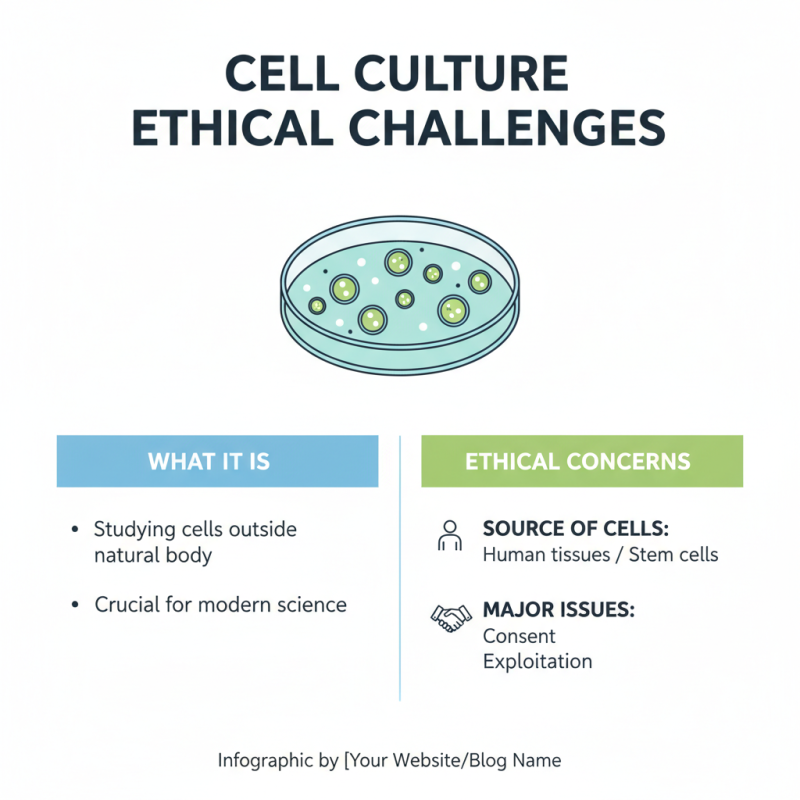
Cell culture has become a vital tool in modern science. It allows researchers to study cells outside of their natural environment. However, this practice is not without its ethical challenges. The source of cells is often a major concern. Many researchers use human tissues or stem cells, which raises questions about consent and exploitation.
Ethical considerations expand further when we look at the treatment of these cells. Are they given the right conditions to thrive? Are they treated humanely? Sometimes, researchers may overlook these factors due to pressure to produce results. This can lead to the mistreatment of cells, which reflects poorly on the scientific community.
Moreover, the lines between scientific advancement and ethical boundaries often blur. Sometimes, we forget to consider the implications of our work. The focus tends to be on results rather than the well-being of living entities. This calls for ongoing reflection and dialogue about best practices in cell culture. Scientists need to be vigilant about these ethical issues to maintain integrity and responsibility in their research.