What is Cell Culture? Understanding Its Importance and Applications in Research
Cell culture is a fundamental technique in cell biology that allows researchers to maintain and grow cells in a controlled environment outside their natural context. This process has revolutionized many fields, including biomedical research, drug development, and toxicology. According to a report by Market Research Future, the global cell culture market is expected to reach approximately $22.4 billion by 2023, reflecting the growing importance and wide-ranging applications of this technology.
Dr. John Smith, a renowned expert in cell biology, emphasizes the significance of this technique, stating, "Cell culture is not just a method; it's a gateway to understanding complex biological processes and developing innovative therapies." As the demand for personalized medicine and targeted therapies increases, the role of cell culture continues to expand. This advancement enables scientists to explore cellular behavior in a controlled setting, facilitating the study of disease mechanisms and the efficacy of new treatments.
In summary, the importance of cell culture in modern scientific research cannot be overstated. By providing a platform for reproducible and scalable experimental conditions, cell culture is pivotal in driving forward our understanding of biology and medicine, paving the way for future breakthroughs.
What is Cell Culture? An Overview of the Process and Techniques
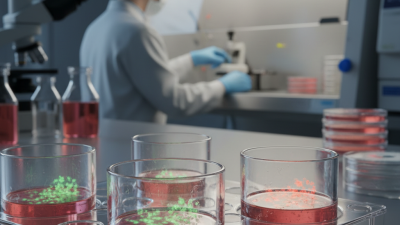
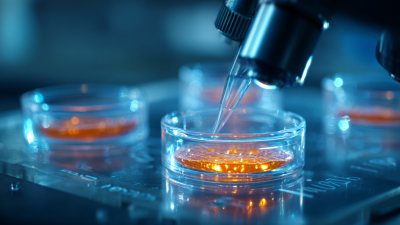
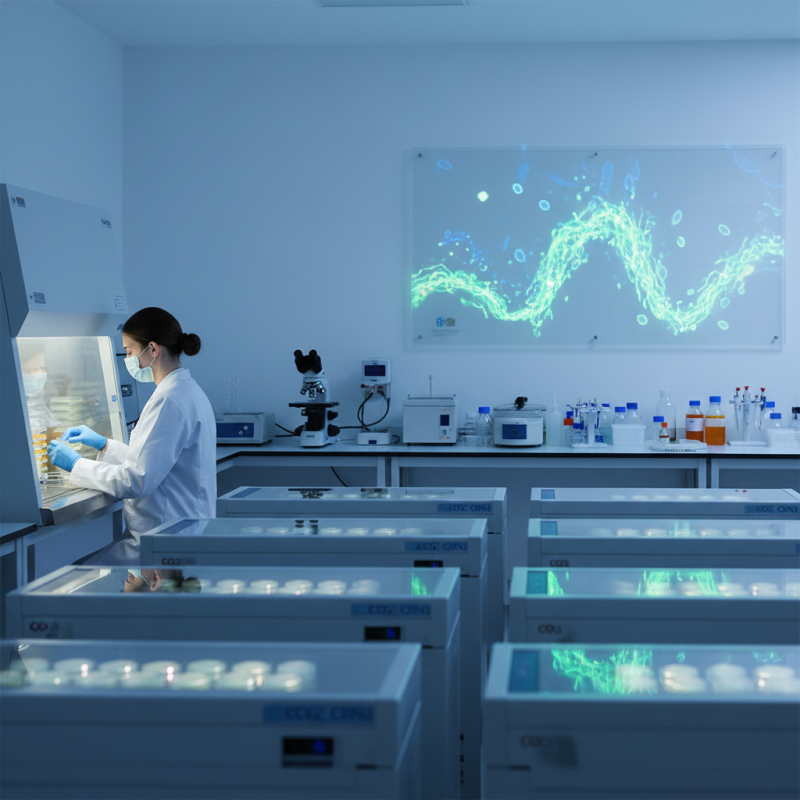
Cell culture is a fundamental technique in biological research that involves maintaining and growing cells in controlled conditions outside their natural environment. The process typically begins with the selection of a suitable cell type, which can be derived from various sources such as animal tissues, human tissues, or even microbial cultures. Once the cells are obtained, they are placed in a growth medium that provides essential nutrients, growth factors, and the right pH for optimal development. This environment allows researchers to study cellular behavior, growth patterns, and responses to various stimuli in a more manageable setting than what is possible in vivo.
There are several techniques utilized in cell culture, each tailored to specific research needs. For instance, adherent cells, which require a surface to attach to, are typically cultured in petri dishes or flasks with a treated surface that promotes adhesion. In contrast, suspended cells thrive in a liquid medium and can be grown in shake flasks or bioreactors. Advanced methods such as three-dimensional (3D) cell culture and organoid systems push the boundaries of traditional techniques, providing a more realistic representation of tissue interactions and responses. Through these diverse techniques, cell culture serves as a vital platform for drug testing, gene expression studies, and the development of novel therapeutic strategies, highlighting its importance in the realm of biological and biomedical research.
The Significance of Cell Culture in Biological Research and Medicine
Cell culture is a fundamental technique in biological research that enables scientists to cultivate cells in controlled environments outside their natural setting. This methodology is not merely a laboratory technique; it serves as a bedrock for innovations in medicine and biology. By providing a platform for detailed observation and experimentation, cell culture allows researchers to explore cellular processes, investigate disease mechanisms, and test the effects of drugs in a controlled manner. This in vitro approach reduces the need for animal models at early research stages, thus enhancing ethical considerations in scientific inquiries.
The significance of cell culture extends into various fields, particularly in drug development and regenerative medicine. Scientists can derive insights into the efficacy and safety of therapeutic compounds before moving into clinical trials, significantly streamlining the drug development process. Furthermore, advancements in stem cell research hinge on the ability to culture specific cell types, enabling potential treatments for conditions like degenerative diseases and injuries. As cell culture techniques evolve, they continue to play a pivotal role in unraveling the complexities of cellular behavior, contributing to a profound understanding of life processes and paving the way for future medical breakthroughs.
What is Cell Culture? Understanding Its Importance and Applications in Research
| Dimension |
Description |
Applications |
| Cell Types |
Various types of cells can be cultured, including mammalian, bacterial, and plant cells. |
Drug development, toxicity testing, and disease modeling. |
| Techniques |
Includes traditional culture methods, bioreactors, and 3D cell culture. |
Vaccine production, regenerative medicine, and tissue engineering. |
| Benefits |
Enables controlled environments for study; reduces reliance on animal testing. |
Cancer research, personalized medicine, and genetic studies. |
| Challenges |
Contamination, genetic drift, and maintaining physiological relevance. |
Standardization of protocols and reproducibility in experiments. |
| Future Trends |
Integration with artificial intelligence and advanced biomaterials. |
Advanced drug screening, complex tissue models, and organ-on-chip technologies. |
Types of Cell Cultures: Primary, Secondary, and Continuous Cell Lines
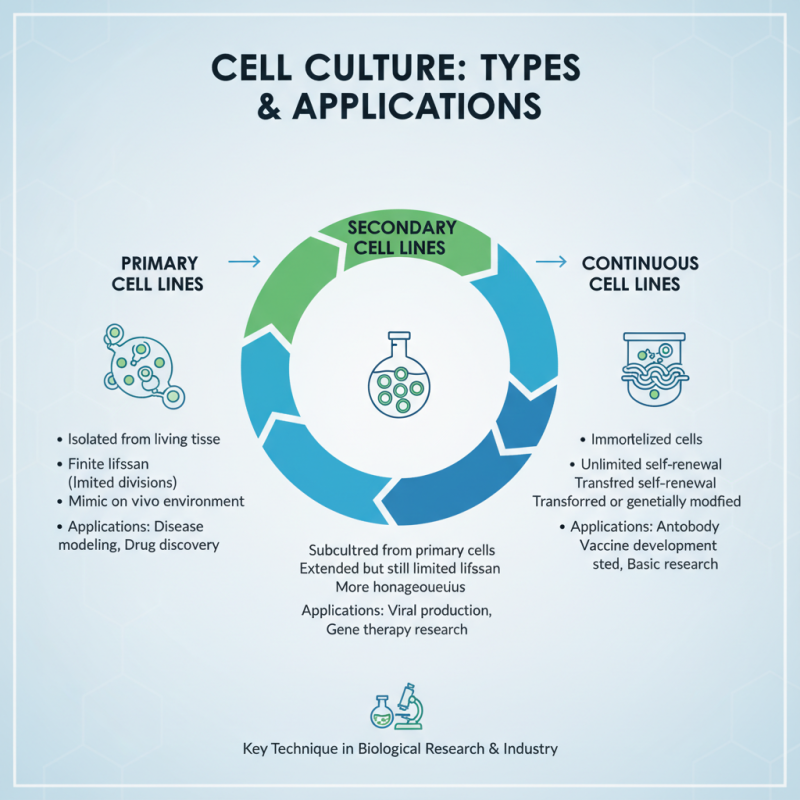
Cell culture is a fundamental technique in biological research that involves the growth of cells outside their natural environment, typically in a controlled laboratory setting. Among the various types of cell cultures, primary, secondary, and continuous cell lines are essential for different applications in research and industry.
Primary cell cultures are derived directly from tissues and have a finite lifespan. These cells closely resemble the original tissue and maintain most of their physiological functions, which makes them invaluable for studying cellular behavior, drug responses, and toxicology. However, due to their limited division potential, they often require frequent subculturing, leading to the gradual loss of some characteristics over time.
Secondary cell lines are established from primary cultures after several passages. They have a longer lifespan and can be subcultured multiple times, which makes them more suitable for extensive research applications. Continuous cell lines, on the other hand, are artificially immortalized and can proliferate indefinitely. They are often used in large-scale production of vaccines, basic biological studies, and genetic research. Each type of cell culture offers unique benefits that cater to specific research needs, highlighting their critical role in advancing our understanding of cellular mechanisms and disease processes.
Applications of Cell Culture in Drug Development and Testing
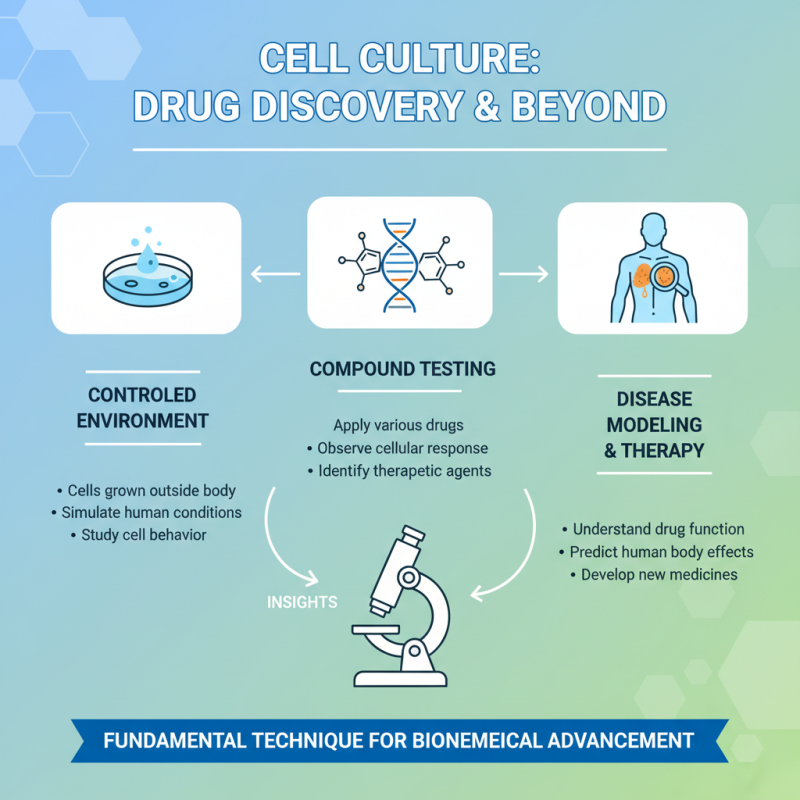
Cell culture is a fundamental technique in biological research, particularly in the realm of drug development and testing. By fostering the growth of cells outside of their natural environment, scientists can create controlled settings to study cellular responses to various compounds. This method provides insights into cellular behavior, which is essential for identifying potential therapeutic agents. The ability to manipulate a diverse range of cell types allows researchers to observe the effects of drugs on human cells, thus facilitating a better understanding of how these compounds could function within the human body.
In drug development, cell culture plays a crucial role at multiple stages, from initial screening to preclinical testing. Before advancing to complex animal models, researchers often utilize cultured cells to evaluate the efficacy and safety of new pharmaceutical compounds. This approach not only accelerates the drug discovery process but also reduces costs associated with early-stage testing. Moreover, different cell lines can provide valuable information regarding the pharmacokinetics and pharmacodynamics of a drug, allowing scientists to assess potential side effects and optimize dosage regimens before proceeding to clinical trials involving human subjects. Through these applications, cell culture stands as a pivotal element in the progress of modern medicine and therapeutic innovations.
Challenges and Ethical Considerations in Cell Culture Practices
Cell culture is a powerful tool in research, enabling scientists to study cellular mechanisms and test new drugs in a controlled environment. However, this practice is not without its challenges and ethical considerations. One of the significant challenges in cell culture is the risk of contamination, which can compromise the integrity of experiments. This necessitates rigorous aseptic techniques and regular monitoring, adding layers of complexity and demands on researchers. Furthermore, the reproducibility of results is often a concern, as variations in cell lines or growth conditions can lead to inconsistent findings.
Ethical considerations in cell culture primarily revolve around the sourcing of biological materials. The use of human-derived cells raises questions about consent and the potential for exploitation, particularly from vulnerable populations. As researchers strive to balance scientific advancement with moral responsibility, discussions are ongoing about the governance of cell lines and the need for transparent practices. Additionally, the treatment of animal-derived cell cultures presents its own set of ethical dilemmas, prompting calls for alternatives that minimize animal use while still providing reliable results. Addressing these challenges and ethical issues is crucial for advancing cell culture methodologies, ensuring that scientific progress aligns with societal values.