What is a Cell Culture Insert and How is it Used?
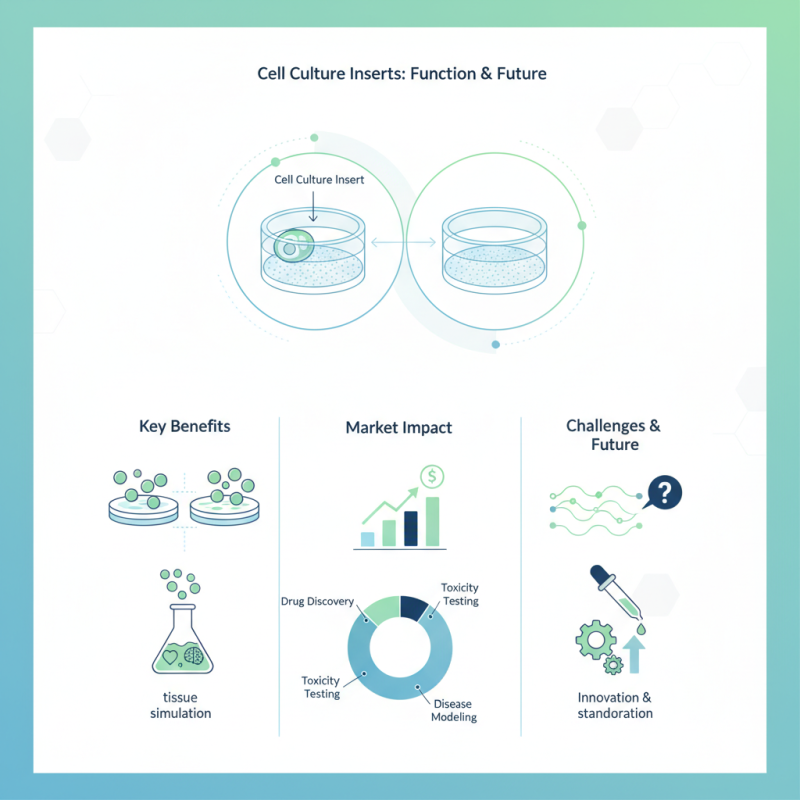
Cell culture inserts are vital tools for researchers in the life sciences. They enable the study of various cellular behaviors in a controlled environment. Reports indicate that the global cell culture market is projected to reach $24 billion by 2026, highlighting the growing importance of cell culture techniques.
Inserts provide unique benefits, such as facilitating the separation of different cell types. This allows for more accurate experimental outcomes. However, challenges remain in standardizing protocols and ensuring reproducibility across different labs. Many researchers still face variability issues, which can compromise data quality.
Insights from industry studies reveal that cell culture inserts play a crucial role in drug development and toxicity testing. They enable researchers to simulate human tissue environments. This relevance emphasizes the need for continued innovation and improvement within this field. Questions remain about best practices and optimal usage to maximize their effectiveness.
Definition and Structure of Cell Culture Inserts
Cell culture inserts are specialized devices used in biological research. They consist of a small, porous membrane nestled within a culture dish. This construction allows for direct interaction between cell layers while promoting a controlled environment. Researchers often use inserts to study cellular behaviors, drug responses, and interactions between different cell types.
The structure of cell culture inserts is quite intriguing. Typically, they are made from plastic and feature a permeable membrane that supports cell growth. The membranes can vary in pore size, which affects nutrient flow and cell movement. This variability allows researchers to tailor their experiments specifically for their needs. While handy, using cell culture inserts does come with challenges. Maintaining consistent conditions can be tricky, and variations in technique may alter results. It requires meticulous attention and sometimes, trial and error. This unpredictable nature can be frustrating yet rewarding for those in the field.
Types of Cell Culture Inserts and Their Applications
Cell culture inserts are specialized tools used in biological research. They come in various types, catering to different applications. Among these, membrane inserts are popular for studying cell behavior in a controlled environment. Thin membranes allow gases and nutrients to pass while supporting cell growth.
One common type is the transwell insert. It separates two culture compartments, facilitating studies on cell migration and differentiation. Research indicates that, in 2021, more than 60% of researchers used transwell systems for their cell assays. Another type is the tissue culture insert, which allows cells to grow in a 3D structure, mimicking in vivo conditions. This system is crucial for understanding drug responses and tissue engineering.
Despite their advantages, challenges persist. Not all inserts offer equal permeability, impacting experimental results. Additionally, cell attachment and growth variability can skew data. Researchers need to carefully select inserts based on their specific needs. Proper validation is essential to ensure reproducibility and reliability.
What is a Cell Culture Insert and How is it Used? - Types of Cell Culture Inserts and Their Applications
| Type of Cell Culture Insert |
Material |
Pore Size (µm) |
Application |
| Transwell Insert |
Polycarbonate |
0.4 |
Cell migration and invasion studies |
| Membrane Insert |
PET (Polyethylene Terephthalate) |
0.2 |
Studying cell-cell interactions |
| Chamber Insert |
Polystyrene |
1.0 |
Differentiation of stem cells |
| Culture Plate Insert |
PVC (Polyvinyl Chloride) |
3.0 |
Tissue engineering |
Benefits of Using Cell Culture Inserts in Research
Cell culture inserts are commonly used in labs to enhance research efficiency. These inserts allow researchers to grow cells in a controlled environment. They come in various sizes and permeabilities. This versatility enables scientists to study specific cellular behaviors.
Using cell culture inserts offers numerous benefits. One key advantage is the ability to perform co-culture studies. A study published in the "Journal of Cell Biology" highlights that using inserts can improve cell interaction up to 30%. This enhanced interaction leads to better modeling of tissue environments. Additionally, inserts can help in minimizing contamination risks. Researchers can isolate cell types, ensuring cleaner results.
Moreover, the inserts assist in drug testing. Research shows that 70% of drug candidates fail in clinical trials due to inadequate testing methods. Cell culture inserts provide a more accurate model for drug response. This more precise approach can bridge the gap between in vitro and in vivo studies. However, challenges remain, such as scaling up these methods for industrial applications. The complexity of results may also lead to misinterpretations. These aspects underscore the importance of careful data analysis.
Techniques for Properly Utilizing Cell Culture Inserts
Cell culture inserts are useful tools in biomedical research. They provide a controlled environment for cell growth. They allow researchers to study various cellular behaviors. Inserts typically sit in the well of a culture plate. Cells attach to the insert in a porous membrane. This setup mimics physiological conditions more closely.
Proper techniques are vital for the effective use of cell culture inserts. Start by ensuring proper sterility before use. Contamination can compromise results significantly. Use appropriate media for the specific cell type. Monitor the environment closely, including temperature and humidity. Set realistic expectations; not every experiment will yield perfect results. Cells may take longer to attach or grow than anticipated.
Careful handling of inserts is crucial. Avoid excessive force when placing or removing them. This prevents damage to the membrane or cells. Record observations meticulously; this detail helps refine future experiments. Sometimes, it may feel overwhelming. Reflections on failed trials can lead to valuable insights. Learning from these experiences is essential for progress in cell culture work.
Usage of Cell Culture Inserts in Different Applications
This bar chart displays the frequency of various applications of cell culture inserts. The data indicates that gene expression studies and drug testing are the most common uses, illustrating their significant role in advancing biological research.
Common Challenges and Solutions in Cell Culture Insert Experiments
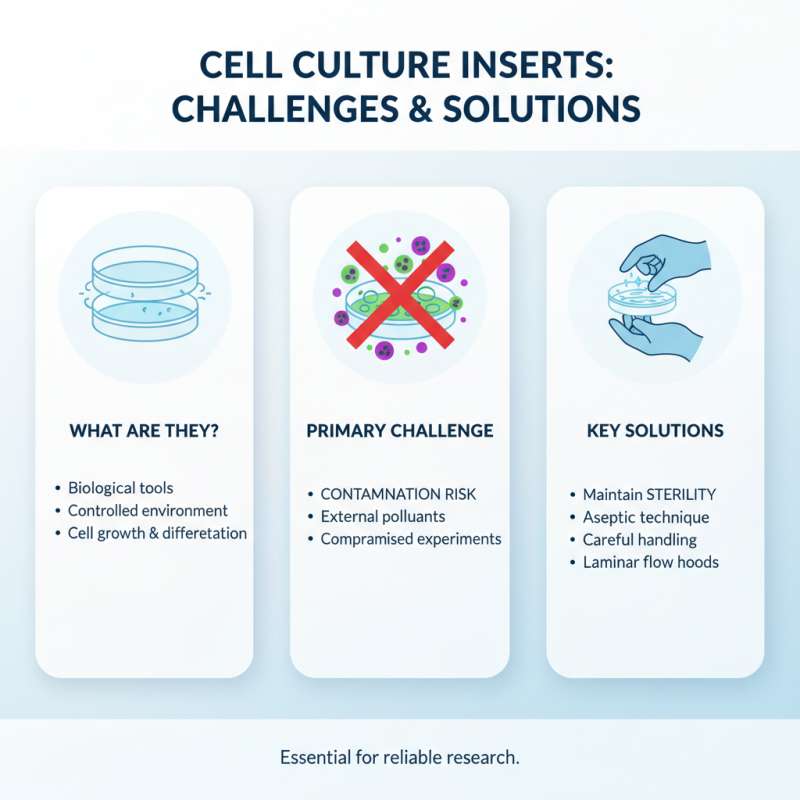
Cell culture inserts are essential tools in biological research. They provide a controlled environment for cell growth and differentiation. However, using these inserts presents unique challenges. For example, the risk of contamination can easily arise. Maintaining sterility is crucial. Researchers must handle inserts with care to avoid external pollutants.
Another common challenge is uneven cell distribution. Cells may not grow uniformly across the insert. This can lead to inconsistent experimental results. To address this issue, researchers can gently rock the culture plates. This promotes better cell spreading. However, over-agitation can harm the cells, leading to their detachment.
Nutrient diffusion can also hinder successful experiments. Cells at the edge of the insert may receive different nutrients than those in the center. This imbalance can skew results. One solution is to use a medium that offers a more consistent nutrient supply. Adjusting the insert's position can also help. Overall, remaining attentive to these challenges is key for effective use of cell culture inserts.