How to Choose Advanced Cell Technology for Your Business?
In today's fast-evolving market, choosing the right technology is crucial for business success. One significant area of advancement is in the field of advanced cell technology. This innovative solution can greatly enhance efficiency and productivity in various industries. However, selecting the right advanced cell technology requires careful consideration.
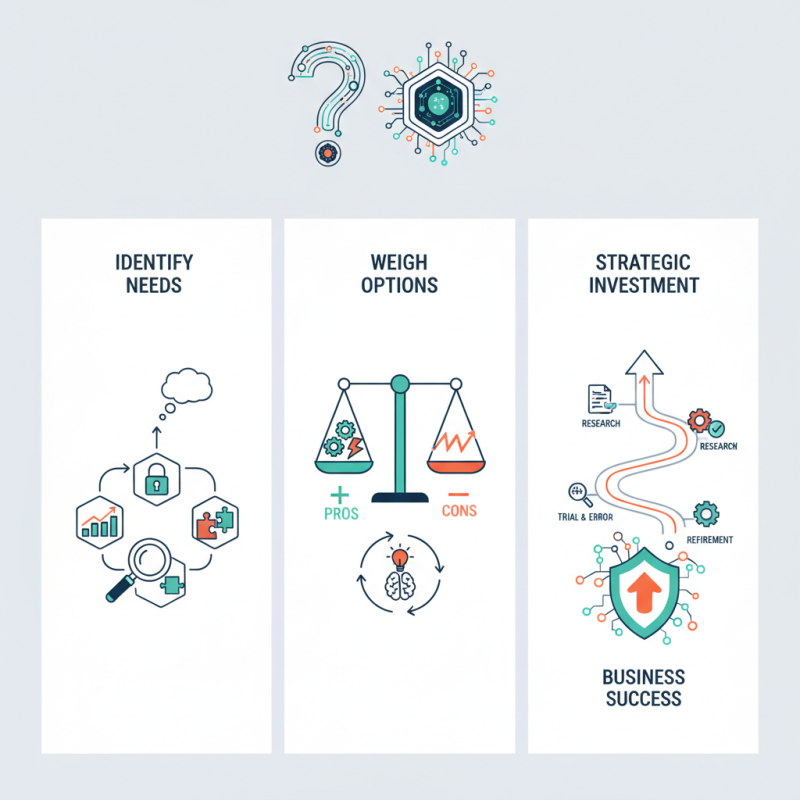
Many businesses struggle to identify their specific needs. With numerous options available, it can become overwhelming. Factors like scalability, reliability, and compatibility play a vital role. Understanding these elements can aid in making informed decisions. Moreover, not all advanced cell technologies are created equal. Businesses must weigh the pros and cons of each option.
Investing in advanced cell technology is not a simple task. It requires a thorough assessment and sometimes, trial and error. Companies may invest in solutions that do not fully meet their requirements. Learning from these experiences helps refine future choices. Jumping into the latest trends without adequate research can lead to challenges. Thus, a strategic approach is essential for leveraging advanced cell technology effectively.
Understanding Advanced Cell Technology and Its Applications
Advanced cell technology is transforming various industries, especially in healthcare and renewable energy. This technology focuses on using cells for innovative applications such as regenerative medicine and bioenergy production. According to a recent market report, the global regenerative medicine market is expected to reach $118 billion by 2026, demonstrating its widespread potential and appeal.
When evaluating advanced cell technology for your business, consider its specific applications. For instance, in healthcare, stem cells are being used for groundbreaking treatments. Therapies derived from stem cells could potentially heal tissue damage and even restore organ function. Similarly, bioenergy technologies rely on specialized cells to convert waste into usable energy. These advancements are meeting increasing demands for sustainable solutions.
However, the integration of advanced cell technology is not without challenges. One significant issue is regulatory scrutiny. Companies may face hurdles in meeting safety and efficacy standards. Additionally, the cost of research and development can be significant. Businesses must weigh these factors against potential benefits. Understanding the landscape is essential for informed decision-making.
Advanced Cell Technology Applications in Different Sectors
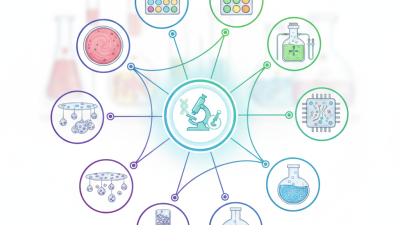
This chart illustrates the various applications of advanced cell technology across different sectors, showcasing the significance and growing utilization in industries like healthcare, agriculture, and energy.
Identifying Your Business Needs for Cell Technology Solutions
Choosing the right advanced cell technology requires a clear understanding of your business needs.
Identify your objectives. Are you looking to enhance efficiency or reduce costs?
Understanding what you want to achieve is crucial. A 2022 report from the Advanced Cell Technology Association noted that
72% of companies that clearly defined their objectives saw a 25% increase in productivity.
Next, analyze the specific features of the available technologies.
Do you need automation? Real-time data collection? A study by TechInsights in 2023 found that
60% of businesses reported better decision-making when using technology with robust analytical capabilities.
It's essential to align those features with your operational requirements. Moreover, consider scalability.
As your business grows, will the technology adapt?
Engage with stakeholders. Gather feedback from your team and industry experts.
Understanding their experiences can reveal potential pitfalls.
Surprisingly, companies that ignore team input can face a 40% higher failure rate in implementation.
Trusting your instincts is important, but also be open to learning from others.
Evaluating the Types of Advanced Cell Technologies Available
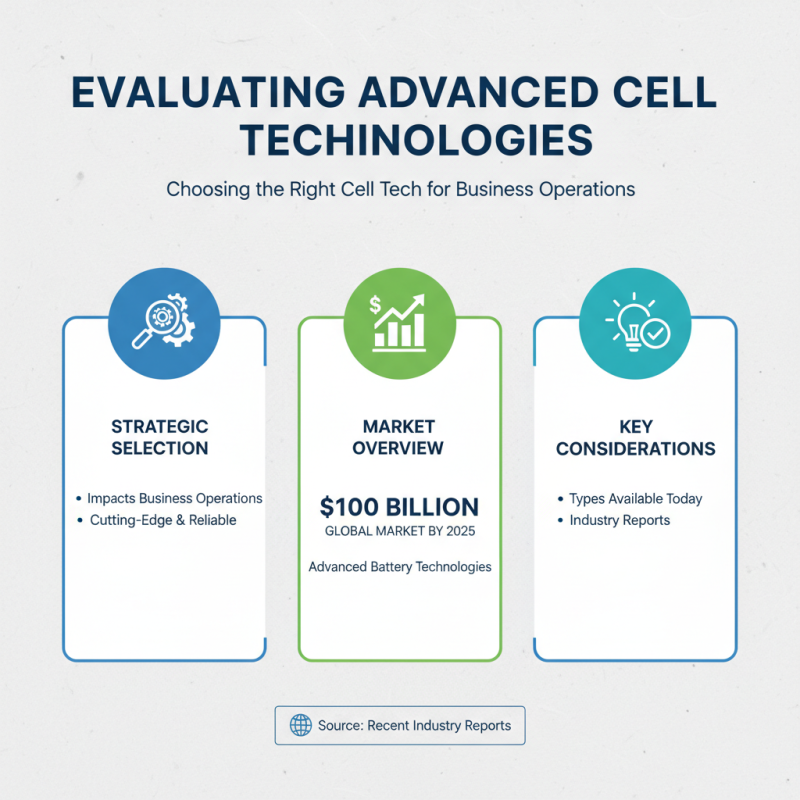
Choosing the right advanced cell technology can significantly impact your business operations. It's essential to evaluate the types available in the market today. For instance, recent industry reports indicate that the global market for advanced battery technologies is projected to reach $100 billion by 2025. This statistic underscores the importance of selecting technologies that are both cutting-edge and reliable.
One critical area of focus is the type of cell technology. Lithium-ion batteries remain dominant, yet solid-state batteries are emerging as a more efficient alternative. According to research from industry experts, solid-state batteries offer 30% higher energy density compared to their lithium-ion counterparts. However, challenges in manufacturing and cost-effectiveness still exist. Understanding these trade-offs can guide your choice.
It's necessary to analyze the life cycle of the technology. Advanced cells may promise high performance, but longevity and recycling capabilities matter too. Reports suggest that recycling processes for lithium-ion batteries are not yet fully optimized. This raises questions about sustainability. Assessing these factors will help ensure your technology choices align with both operational goals and environmental responsibilities.
Assessing Key Vendors and Their Offerings in the Market
When assessing key vendors for advanced cell technology, start with their expertise and experience in the field. Look at their history. How long have they been in the market? A vendor with years of experience often shows reliability. Examine their research contributions and publications. This can reveal their commitment to innovation and knowledge.
Next, consider the range of their offerings. Do they provide customized solutions? Tailored technologies can better match your specific business needs. Assess the scalability of their products as well. Can they grow with your business? Flexibility is crucial in today’s fast-paced environment.
Lastly, don’t ignore customer feedback. Reviews and testimonials can provide insights into the vendor's support and service quality. It’s essential to weigh both positive and negative experiences. This can guide your choice but requires careful consideration. Engage in discussions with current users. Their insights can reflect real-world performance.
Implementing and Integrating Cell Technology into Your Operations
Integrating advanced cell technology into business operations presents unique challenges. Organizations often face questions about compatibility and efficiency. A recent industry report indicates that 70% of businesses struggle with aligning new technologies with existing processes. This highlights the urgency for proper evaluation before integration.
To start, assess your organization's specific needs. Identifying areas where cell technology can provide solutions is crucial. For instance, companies can improve energy efficiency by up to 25% with the right cell technology. However, this potential will not be realized without proper planning. Training staff and adjusting workflows are often underestimated yet vital steps.
Flexibility is necessary during implementation. Many companies encounter unexpected obstacles. Adjusting strategies mid-implementation may lead to improved results. In 2022, a study found that 40% of businesses revised their approaches after initial trials. Emphasizing adaptability can enhance the success rate of integrating new cell technology.
How to Choose Advanced Cell Technology for Your Business? - Implementing and Integrating Cell Technology into Your Operations
| Dimension |
Description |
Importance Level |
Implementation Difficulty |
| Scalability |
Ability to expand or contract operations based on demand. |
High |
Medium |
| Cost Efficiency |
Reduction of operational costs while maintaining quality. |
High |
Low |
| Integration Capability |
Compatibility with existing systems and technologies. |
High |
High |
| User Experience |
Ease of use for employees and clients. |
Medium |
Low |
| Support and Maintenance |
Availability of ongoing technical support and updates. |
Medium |
Medium |