Mastering your cell biology module is crucial for success in biological sciences. Understanding complex cellular processes and interactions is fundamental. Recent reports indicate that 70% of students struggle with cell biology concepts, leading to lower overall grades. Thus, effective study techniques become essential.
Active engagement in the learning process enhances retention. Visual aids, for example, help clarify intricate details. However, many students overlook these tools. Instead, they might rely on rote memorization, which often falls short. Incorporating different methods can significantly boost comprehension.
Building a solid foundation in cell biology is not merely academic; it prepares students for careers in various fields. Biotechnology, pharmacology, and health sciences all rely on cell biology expertise. Yet, despite its importance, many students feel overwhelmed. Reflecting on one’s study habits and adapting them can lead to improved outcomes.

Understanding the core concepts of cell biology can be challenging yet rewarding. One fundamental concept is the structure and function of cell membranes. Cell membranes regulate what enters and exits the cell. This selective barrier is crucial for maintaining homeostasis. Reflect on how this plays a role in cellular communication.
One effective tip is to visualize the processes. Drawing diagrams can help cement your understanding of complex pathways like cellular respiration. Start with simple sketches. You don’t need to be an artist; clarity is what matters. Use colors to differentiate between key components.
Additionally, actively test your knowledge. Flashcards can aid retention of essential terms like organelles and their functions. Practice questions are helpful too. Embrace the mistakes you make during practice. They often reveal areas needing more focus. If a concept doesn’t click right away, allow yourself time to revisit it. Understanding takes patience and persistence.
| Tip Number | Tip Description | Core Concept |
|---|---|---|
| 1 | Create a study schedule. | Time Management |
| 2 | Utilize visual aids like diagrams. | Visual Learning |
| 3 | Form study groups with peers. | Collaborative Learning |
| 4 | Engage in active recall techniques. | Memory Techniques |
| 5 | Regularly test yourself with quizzes. | Self-Assessment |
| 6 | Focus on understanding over memorization. | Conceptual Understanding |
| 7 | Attend all lectures and take detailed notes. | Engagement |
| 8 | Utilize online resources and forums. | Resource Utilization |
| 9 | Connect concepts to real-world applications. | Real-World Connection |
| 10 | Stay organized with a digital or physical binder. | Organization |

Mastering cell biology requires a strategic approach. Effective study techniques can make a huge difference. One essential tip is to create visuals. Diagrams and flowcharts help organize complex processes. When you can see the interactions clearly, it becomes easier to remember.
Another important method is active learning. Instead of passively reading, engage with the material. Quiz yourself regularly. This can expose gaps in your knowledge. Use flashcards to reinforce key terms. It’s a practical way to enhance recall. Don't forget to study in short, focused sessions. Long hours often lead to burnout and reduce retention.
Use group study sessions for collaboration. Discussing topics with peers can offer new insights. However, be cautious of distractions. Ensure the group stays on topic. Reflect on your strategies regularly. If a method isn't working, don't hesitate to change it. Personalizing your study routine is vital for success.
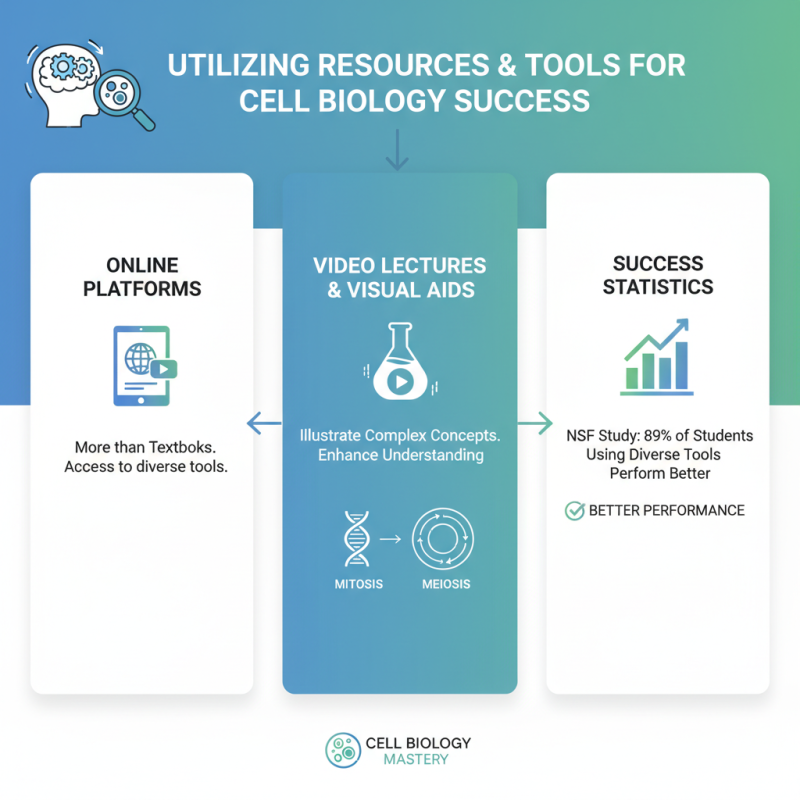
Mastering cell biology requires more than just textbooks. Online platforms provide a wealth of resources. According to a study by the National Science Foundation, 89% of students who use diverse tools perform better. Video lectures often illustrate complex concepts clearly. Visual aids enhance understanding, especially for intricate processes like mitosis and meiosis.
Joining study groups can also be invaluable. Working with peers fosters discussion and problem-solving. Research shows that collaborative learning can boost retention by 40%. Utilizing apps and online simulations allows you to interact with cell functions. Some simulations enable virtual experiments, letting you visualize real-life scenarios.
However, it's essential to reflect on your study habits. Some students may rely too heavily on technology. This can lead to superficial understanding. Engaging deeply with the material is crucial for success. Balancing diverse resources and traditional methods creates a well-rounded study approach. Finding the right mix can significantly improve your grasp of cell biology.
Mastering a cell biology module can be challenging. Retaining complex information requires effective strategies. According to a study from the National Science Foundation, around 70% of students struggle to grasp intricate biological concepts. Here are some tips to aid retention.
One effective method is to create visual aids. Diagrams of cellular processes can simplify complicated ideas. Research shows that students who use visual tools retain 30% more information. Additionally, engaging in active learning helps deepen comprehension. Try discussing topics with peers or teaching others. Teaching reinforces your own understanding and highlights gaps in knowledge.
Another strategy is to implement spaced repetition. Instead of cramming, review material over time. Studies indicate that spaced learning increases retention rates by up to 50%. Keep returning to difficult topics. This practice not only aids recall but also helps identify unclear areas needing more focus. Embrace mistakes as learning opportunities. Reflecting on errors can clarify misconceptions and strengthen understanding.
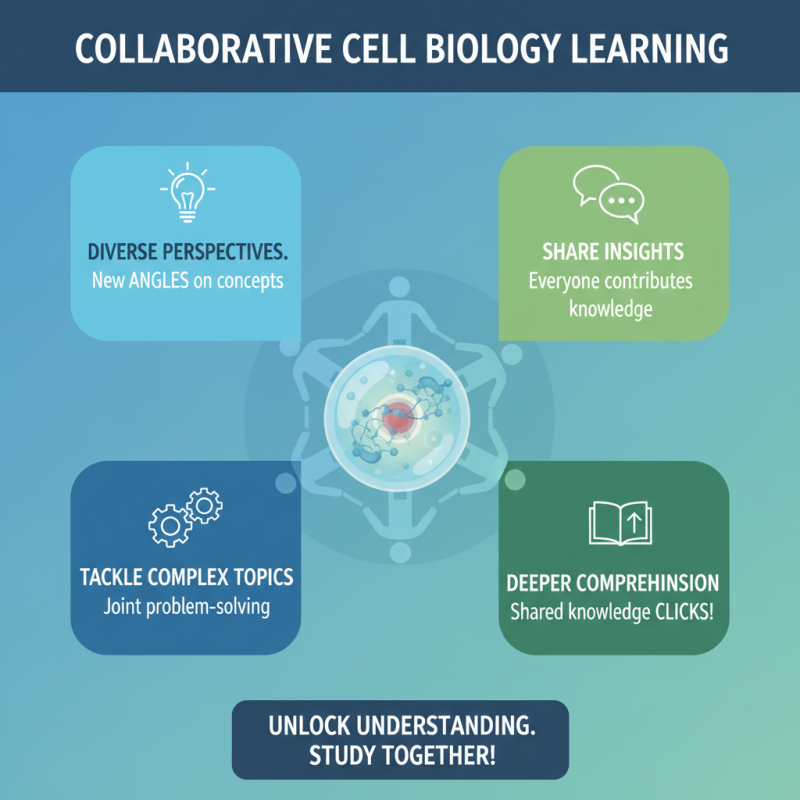
Collaborative learning can transform your understanding of cell biology. Group study sessions encourage diverse perspectives. When you study with peers, you share insights and tackle complex topics together. This shared knowledge fosters a deeper comprehension of the material. One might share a concept that suddenly clicks for another. Such moments can be enlightening.
However, effective group work requires focus. It’s easy to stray off-topic or get distracted. Setting a clear agenda can keep everyone aligned. Each session should have specific goals. Maybe one person leads a discussion on cell respiration. Another can explain cell signaling pathways. It’s vital to rotate these roles to ensure everyone participates.
Not every group session will be productive. Sometimes, discussions may not flow. You might find certain members unprepared. These situations highlight the need for accountability. Reflecting on what worked and what didn't helps improve future sessions. Embracing these imperfections will refine your collaborative approach.