Top Operation Theatre Surgical Light Manufacturers?

Choosing the Top Operation Theatre Surgical Light Manufacturers requires more than comparing brightness or product prices. A dependable manufacturer should understand sterile workflows, surgeon visibility, shadow control, heat management, and long operating hours. In a real theatre, the light must remain stable while teams move around the table. Small failures matter. A flickering beam can interrupt concentration, while excessive heat can discomfort staff during lengthy procedures.

Professor Richard M. Satava, a surgeon and medical-technology authority, has often emphasized that technology should assist the surgeon, not distract the surgeon. This principle is highly relevant when evaluating an Operation Theatre Surgical Light. The best systems combine high color-rendering performance, adjustable intensity, deep-cavity illumination, and smooth arm movement. They should also support cleaning routines and dependable maintenance.

This guide examines leading manufacturers through practical evidence, not marketing language alone. It considers optical design, LED lifespan, sterile handle options, control interfaces, installation support, and documented quality systems. Manufacturer experience in hospitals also deserves attention. A product may look impressive in a showroom, yet feel awkward above a crowded operating table.

There is no perfect choice. Budget limits, theatre dimensions, procedure types, and local service access can change the ranking. That is easy to overlook. Buyers should request demonstrations, inspect technical documentation, and speak with clinical users before deciding. A trustworthy supplier explains limitations clearly. That honesty is often more valuable than a long feature list.
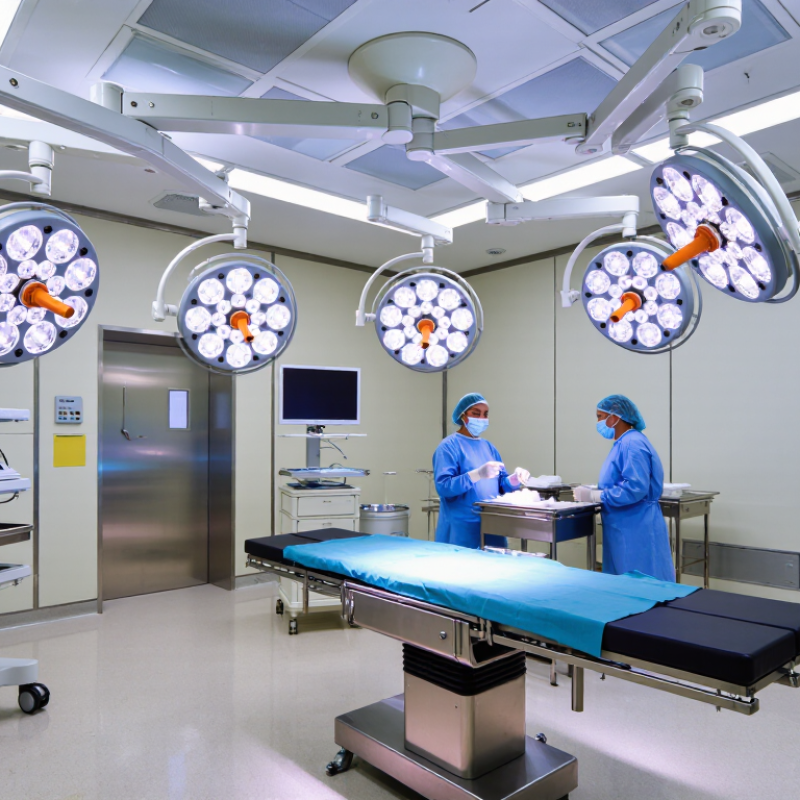
Top Operation Theatre Surgical Light Manufacturers?

Definition and Role of Surgical Lights in Modern Operation Theatres

Top Operation Theatre Surgical Light Manufacturers?

Definition and Role of Surgical Lights in Modern Operation Theatres

A surgical light is a medical illumination system designed for precise, shadow-reduced visualization. It exposes tissue color, vessel edges, and instrument details during demanding procedures. IEC 60601-2-41:2021 specifies central illuminance between 40,000 and 160,000 lux for operating lights. The standard also addresses color rendering, heat, field size, and electrical safety.

Modern operation theatres need more than brightness. Multi-head systems help reduce shadows when surgeons, staff, or equipment interrupt the beam. Adjustable intensity supports different stages, from incision planning to wound closure. Low radiant heat matters too. Excess heat can increase discomfort, drying, and staff fatigue during lengthy operations. A 2023 report from the International Energy Agency also highlights healthcare buildings as energy-intensive facilities, making efficient LED systems increasingly relevant.

Experienced theatre teams usually assess light movement, sterilizable handles, control response, and backup performance. These details become obvious at 2 a.m. during a long emergency procedure. Yet illumination alone cannot correct poor positioning or limited surgical access. That is an easy assumption to challenge. Manufacturer evaluation should include verified photometric data, maintenance records, and compatibility with ceiling-mounted equipment. Some specifications look impressive on paper but feel awkward above the table. Hands-on testing remains essential.

Key Features That Distinguish Leading Surgical Light Manufacturers

Leading surgical light manufacturers distinguish themselves through measurable performance, not polished catalog images. In an operating theatre, light must reach deep cavities without harsh glare. A balanced beam reduces shadows around hands, instruments, and retractors. High color rendering helps clinicians identify subtle tissue differences. Color temperature adjustment supports different procedures and camera systems. These details matter during long operations.

Reliable manufacturers document illumination tests, thermal behavior, electrical safety, and cleaning compatibility. They use sealed housings and smooth surfaces to limit fluid and dust collection. Touchless controls reduce interruptions when sterile gloves are required. Articulated arms should move steadily, then hold position without drift. A loose arm becomes a daily frustration. LEDs should maintain stable output over many hours, not only during demonstrations. Still, no design is perfect. Excessive brightness can create glare, while complex controls may slow unfamiliar staff. Good engineering leaves room for simple manual adjustment.

Service quality separates leading suppliers from merely capable manufacturers. Clear maintenance schedules, replaceable modules, calibration support, and documented training improve dependable use. Hospitals should request test reports and observe the light in a simulated theatre. A specification sheet cannot show every shadow or awkward handle position. Installation teams should assess ceiling height, table movement, and existing power systems. Feedback from surgeons, nurses, and biomedical engineers reveals practical weaknesses early. That feedback may challenge the original design. It should. The best manufacturers respond with evidence, not vague promises.

Leading surgical-light designs are typically distinguished by high central illuminance, excellent color rendering, adjustable color temperature, strong shadow management, and reliable emergency power support. The values shown are representative industry reference targets rather than brand-specific performance data.

Major Global Manufacturers of Operation Theatre Surgical Lights

Major global manufacturers of operation theatre surgical lights are concentrated across Europe, North America, and East Asia. These companies typically design systems for hospitals, ambulatory surgery centers, and teaching facilities. Their products often include ceiling-mounted, wall-mounted, or mobile configurations. Manufacturing strength matters, but clinical suitability matters more.

Experienced manufacturers provide measurable data, not vague claims. Buyers should review illumination levels, color rendering, shadow reduction, light-field diameter, and heat control. A dependable surgical light may offer adjustable intensity and a color temperature near natural daylight. Sterile handles should be easy to remove and disinfect. Smooth arm movement also helps surgeons position the lamp without interrupting the procedure. Small details matter.

After-sales support can separate a reliable supplier from an impressive catalogue. Check installation training, spare-part availability, preventive maintenance, and response times in the hospital’s region. Electrical compatibility and ceiling-load requirements need verification before purchase. Some manufacturers publish thorough technical files, while others leave important details unclear. That should prompt careful questioning. No system is perfect. Glare, awkward controls, or weak service coverage can become serious problems during long operations. Procurement teams should therefore assess clinical feedback, documented testing, and local engineering capability instead of relying only on price or appearance.

Manufacturing Standards, Certifications, and Quality Control

Top Operation Theatre Surgical Light Manufacturers?

Reliable surgical light manufacturing begins with controlled processes, not attractive product photos. Qualified manufacturers typically operate under ISO 13485, with documented design controls, risk management, and traceable production records.

ISO 14971 supports hazard assessment throughout the product lifecycle. Electrical safety should align with IEC 60601-1, while surgical luminaires require attention to IEC 60601-2-41. Market access may also involve regional conformity requirements. A conformity mark alone does not prove consistent manufacturing quality.

Quality control must follow the light from incoming components to final inspection. Technicians should verify illuminance, color rendering, color temperature, shadow dilution, heat output, and adjustment stability.

Electrical leakage and electromagnetic compatibility require recorded tests, not informal judgments. Sterilizable handles need repeated cleaning-cycle evaluations. Cable routing and brake performance deserve practical checks. Small failures matter.

Traceability matters most.

Experienced factories retain batch numbers, calibration records, inspection images, and corrective-action reports. Production samples should undergo aging tests, vibration checks, and repeated positioning trials. Operators can reveal problems that laboratory measurements miss.

However, testing is never perfect. A checklist may overlook glare during a long procedure, or a loose joint may appear only after months of use. Manufacturers should review complaints honestly and update risk controls.

Independent audits and transparent technical files strengthen confidence more than polished claims. Procurement teams should examine certificates, test scope, expiry dates, and whether documents match the exact model.

How Hospitals Evaluate and Select a Surgical Light Manufacturer

Hospitals do not choose an operating theatre light by brightness alone. They assess clinical performance, safety evidence, service response, and lifecycle cost. During evaluation, surgical teams often test a light over a simulated wound, checking shadows, glare, color rendering, and movement around anesthesia equipment. A useful demonstration includes both deep-cavity and surface procedures.

Standards provide a practical baseline. IEC 60601-2-41 addresses essential requirements for surgical and diagnostic luminaires, while ISO 13485 supports controlled medical-device quality systems. Hospitals should request test reports, risk-management records, electrical safety documents, and evidence of production consistency. The WHO Global Guidelines for the Prevention of Surgical Site Infection report an 11.8% pooled incidence in low- and middle-income countries, compared with 7.6% in high-income countries. A light cannot prevent infection alone, but sealed surfaces, easy cleaning, and minimal exposed joints support a safer room design.

Service quality often decides the purchase. Procurement teams should examine installation training, spare-part availability, preventive-maintenance intervals, and guaranteed response times. Ask for measurable values, not broad claims. Check illuminance at working distance, color temperature, color-rendering index, shadow dilution, and backup operation. A five-year cost model should include lamps, batteries, calibration, downtime, and staff training. Some manufacturers present excellent laboratory figures, yet perform less convincingly during a crowded procedure. That deserves scrutiny. A realistic site trial may reveal awkward controls, drifting arms, or handles that feel too warm. Specifications matter, but daily usability matters more.

chevron-down