2026 How to Master Cell Culture Techniques for Successful Research?
Cell culture is a fundamental technique widely used in biological and medical research. Mastering these techniques ensures successful experimental outcomes. This process involves nurturing cells in controlled environments, allowing researchers to observe cellular behavior and responses. Cells can be derived from various tissues, making it a versatile method for multiple studies.
However, cell culture is not without its challenges. Contamination is a frequent issue that can compromise results. Maintaining the right conditions is crucial but often tricky. Variables such as temperature, pH, and nutrient availability require constant attention. Moreover, the reproducibility of experiments can be elusive, leading to inconsistent results. Researchers must remain vigilant and adapt to the nuances of their specific cell lines.
Developing expertise in cell culture techniques can greatly enhance research quality. Learning the intricacies involved, from media selection to passaging techniques, is essential. By addressing potential pitfalls and embracing the complexity of cell culture, scientists can improve their experimental designs and achieve more reliable findings.
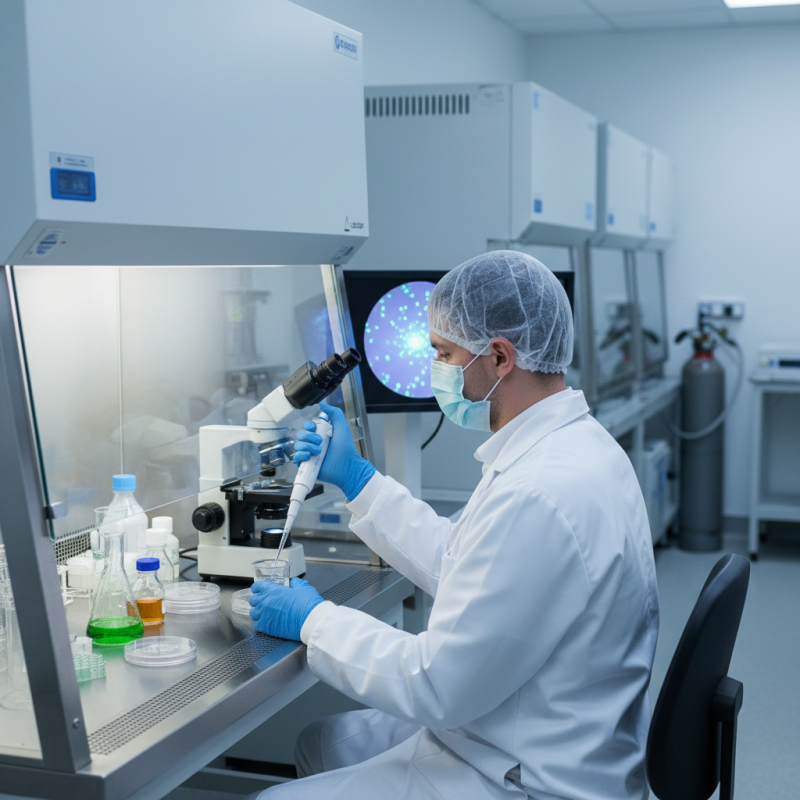
Understanding the Basics of Cell Culture: Terminology and Techniques
Mastering cell culture techniques is crucial for successful research. Understanding the basics is the first step. Cell culture involves growing cells in a controlled environment. It is widely used in biotechnology and pharmaceuticals. According to a recent industry report, the global cell culture market is expected to reach $24 billion by 2026. This growth highlights its significance in medical research and drug development.
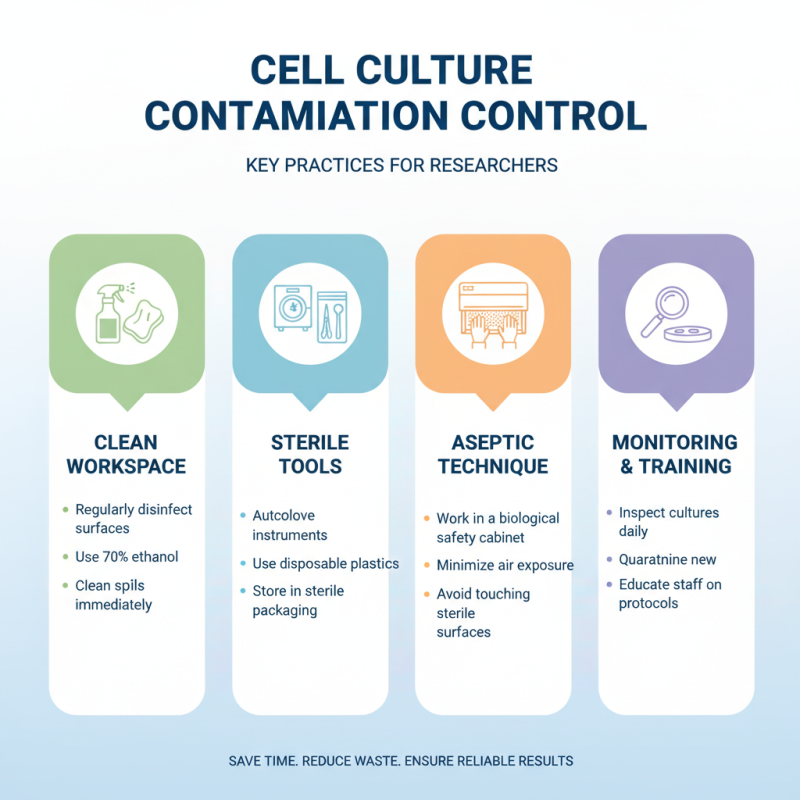
Terminology is vital when discussing cell culture. Terms like “aseptic technique,” “media,” and “passaging” are common. Aseptic techniques minimize contamination risks. By maintaining a sterile environment, researchers can ensure reliable results. However, mistakes often happen, like using contaminated tools. Such errors can lead to flawed experiments.
Tips for effective cell culture include regular monitoring of cell health. This is crucial for detecting problems early. Keep an eye on pH levels and nutrient depletion. Use quality control measures to validate results. Also, do not rush the passaging process. Cells need time to adapt, or they may behave unpredictably. Adjusting incubation temperatures and conditions is necessary but can be challenging. Always document changes for future reference.
2026 How to Master Cell Culture Techniques for Successful Research? - Understanding the Basics of Cell Culture: Terminology and Techniques
| Technique |
Description |
Applications |
Advantages |
Disadvantages |
| Adherent Cell Culture |
Cells attach to a surface for growth. |
Cancer research, drug development. |
Easy to handle, high cell density. |
Limited cell types, requires special surfaces. |
| Suspension Cell Culture |
Cells grow freely in a medium. |
Bioproduction, vaccine development. |
Good for scalable processes. |
Lower yield per volume compared to adherent. |
| 3D Cell Culture |
Cells grow in a three-dimensional environment. |
Toxicity testing, regenerative medicine. |
More physiologically relevant. |
Complexity in handling and analysis. |
| Stem Cell Culture |
Culture of undifferentiated cells. |
Regenerative medicine, developmental biology. |
Ability to differentiate into various cell types. |
Ethical concerns, complex culture conditions. |
| Co-Culture Systems |
Growth of two or more different cell types. |
Cell interaction studies, tissue engineering. |
Mimics in vivo environment. |
Potential for contamination and complexity. |
Essential Equipment and Materials for Effective Cell Culture Practices
When mastering cell culture techniques, having the right equipment and materials is crucial. Basic requirements include incubators, biosafety cabinets, and glassware. An incubator provides the optimal environment for cells. Biosafety cabinets protect both the user and the cultures. Use high-quality glassware to prevent contamination and ensure accurate results.
Tips: Regularly clean your workspace. Contamination can ruin weeks of work. Monitor your equipment's calibration to maintain ideal conditions.
Besides the essentials, consider specialized tools like microscopes for cell observation. Centrifuges are also vital for separating components. Always keep your inventory stocked with reagents and media, as running out can hinder progress.
Tips: Track usage rates of materials. This helps prevent disruption in your workflow. Store reagents correctly to ensure longevity and effectiveness. Regularly assess your method protocols for improvements.
Step-by-Step Protocols for Cell Line Maintenance and Handling
Cell culture is fundamental in many areas of biological research. Proper handling and maintenance of cell lines are crucial for successful experiments. Adhering to appropriate protocols can significantly enhance your success rate.
Regular monitoring and maintenance of your cell lines are essential. Cells thrive in optimal conditions. Keep a close eye on pH, temperature, and nutrient levels. For instance, medium should be refreshed every 2-3 days. Ensure that your CO2 levels are stable, typically around 5%. Tip: Use a pH indicator to monitor changes.
Contamination remains a common issue in cell culture. It's vital to maintain a sterile environment. Always use sterile tools, and avoid touching any surfaces with bare hands. If contamination occurs, document changes and review your procedures. This reflection can reveal steps for improvement. Tip: Perform routine contamination checks with reliable assays.
Cell lines can also affect experiment outcomes. They can mutate over time, leading to variable results. Regularly validate your cell line’s identity through methods like short tandem repeat (STR) profiling. This ensures that your results are reproducible and reliable. Keep detailed records to track any anomalies or changes in growth patterns.
Evaluation and Optimization of Cell Culture Results for Research Success
Cell culture techniques are crucial for advancing research in various fields. To achieve successful results, it's essential to evaluate and optimize these techniques continuously. According to a recent industry report, nearly 30% of cell culture experiments fail due to contamination or inadequate environmental conditions. This stark statistic highlights the need for rigorous evaluation methods.
Optimizing cell culture conditions involves fine-tuning factors such as temperature, pH levels, and nutrient media. For instance, a study found that small temperature fluctuations as minor as 0.5 degrees Celsius can significantly impact cell viability. Researchers must regularly assess their protocols to identify areas for enhancement. Inadequate training and oversight often lead to inconsistent results.
Moreover, understanding the specific needs of each cell type is vital. Not all cell lines thrive under the same conditions. A failure to recognize this can lead to wasted resources and time. Implementing a systematic approach to monitor each culture line will provide insights into what works and what doesn't. In research, every detail counts, and reflection on these practices can drive significant improvements.
Cell Culture Techniques Evaluation: Key Parameters for Research Success
This bar chart illustrates the evaluation of key parameters in cell culture techniques that impact research outcomes. The parameters include Viability, Proliferation Rate, Contamination Rate, and Differentiation Success, measured across various experimental conditions.