Why Suspension Cell Culture is Essential for Biotech and Pharmaceutical Research
Suspension cell culture plays a pivotal role in the fields of biotechnology and pharmaceuticals, serving as an essential method for the large-scale production of recombinant proteins, antibodies, and vaccines. As Dr. Emily Chen, a prominent expert in cell culture technologies, aptly states, "The efficiency and scalability of suspension cell culture make it a cornerstone in the development of therapeutic agents." This technique allows for a more uniform environment for cells, leading to consistent product quality and higher yields, which are crucial for meeting the demands of modern therapeutics.
The significance of suspension cell culture extends beyond mere productivity; it also enhances our understanding of cellular processes and facilitates the discovery of new drugs. In an era where biologics and biopharmaceuticals are at the forefront of medical innovation, the ability to conduct high-throughput screening and refine cell lines quickly is indispensable. By leveraging suspension cell cultures, researchers can experiment more efficiently and make strides in producing life-saving treatments, ultimately transforming patient care and pushing the boundaries of science.
As the biotechnology landscape continues to evolve, the need for resilient and adaptable cell culture systems becomes increasingly apparent. Suspension cell culture not only meets these demands but also sets the stage for breakthroughs in drug development and personalized medicine, demonstrating its fundamental importance in addressing global health challenges.
Definition and Overview of Suspension Cell Culture
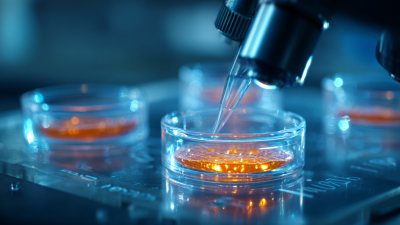
Suspension cell culture is a cornerstone technique in biotechnology and pharmaceutical research, allowing scientists to cultivate cells in a liquid medium. This method supports both adherent and suspension cell types, which is crucial for various applications in drug development and cell therapies. Recent innovations have enabled the creation of fully automated cell preparation systems, significantly enhancing efficiency in laboratory settings. By optimizing the cell culture process, researchers can better focus on developing groundbreaking treatments for conditions such as cancer and rare diseases.
According to industry reports, the global cell culture market is projected to reach approximately $23.5 billion by 2028, driven by advancements in technologies like suspension culture. This growth is fueled by the increasing demand for cell and gene therapies (CGT), which have emerged as revolutionary solutions in precision medicine. With CGT standing as a third pillar alongside small molecule and biologic therapies, the ability to efficiently manufacture and manipulate cells becomes a critical factor for success in developing future therapies.
Tips: Ensure the culture medium is optimized for your specific cell type to promote optimal growth and yields. Additionally, consider integrating automation into your workflow to enhance precision and reduce manual errors, especially when scaling up for therapeutic applications.
Why Suspension Cell Culture is Essential for Biotech and Pharmaceutical Research
| Dimension |
Description |
Importance |
| Definition |
Suspension cell culture refers to the growth of cells in a liquid medium, allowing them to float freely. |
Essential for scalability and high-density cell production. |
| Applications |
Used for vaccine production, monoclonal antibody generation, and biopharmaceutical development. |
Critical for the rapid development of therapeutics. |
| Key Advantages |
Higher growth rates, ease of scale-up, and simpler nutrient medium formulation. |
Improves the efficiency of production processes. |
| Types of Cells |
Includes mammalian cells, insect cells, and plant cells. |
Supports a diverse range of projects in biotech. |
| Challenges |
Contamination risk and optimization of growth conditions. |
Addresses the importance of maintaining culture integrity and productivity. |
| Future Trends |
Increasing integration of automation and novel bioreactor designs. |
Enhances productivity and reduces operational costs. |
Importance of Suspension Cell Culture in Biotechnology
Suspension cell culture plays a vital role in biotechnology, serving as the backbone for many research and development processes. This method allows cells to grow freely in a liquid medium, facilitating the production of biologics, vaccines, and other therapeutic agents. One of the main advantages of suspension cultures is their scalability, enabling researchers to quickly adapt their experiments to meet production demands. As a result, suspension cell culture is integral to the efficient development of new treatments and drugs.
**Tip:** When working with suspension cultures, it’s crucial to maintain optimal environmental conditions such as pH, temperature, and nutrient availability. Regular monitoring can prevent undesirable changes in cell physiology that could affect experimental outcomes.
Another significant aspect of suspension cell culture is its ability to simplify the harvest process. Since cells are not adhered to the surface of a culture vessel, they can be easily collected, analyzed, and processed for downstream applications. This ease of harvesting reduces labor and increases the speed at which researchers can advance their projects.
**Tip:** Implementing automated systems can enhance the consistency and efficiency of cell culture practices. Automation reduces human error and allows for real-time monitoring of cell growth, leading to more reliable outcomes in your research efforts.
Applications of Suspension Cell Culture in Pharmaceutical Research
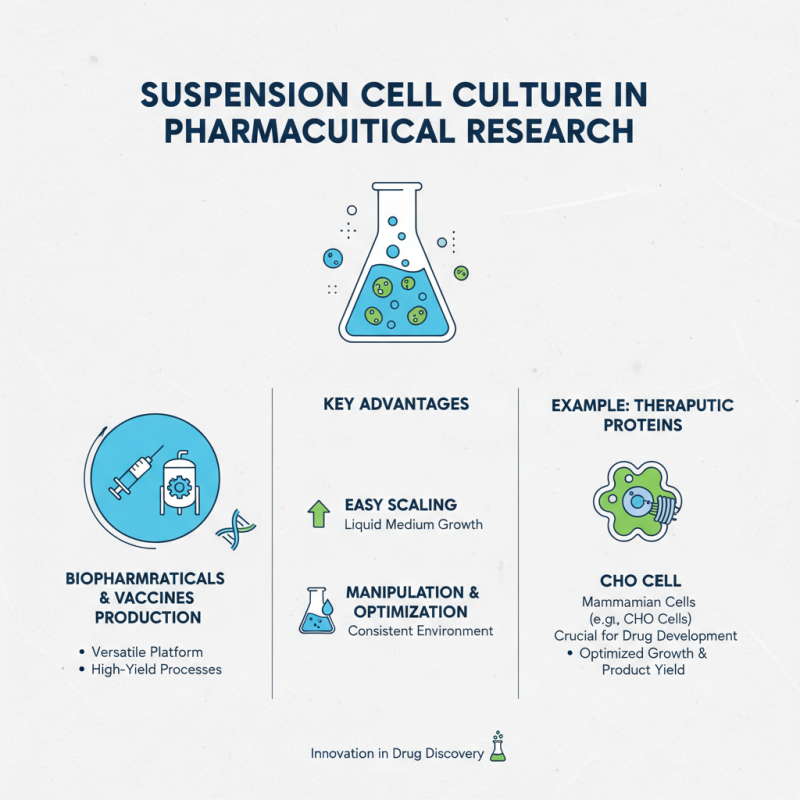
Suspension cell culture plays a pivotal role in pharmaceutical research by providing a versatile platform for the production of biopharmaceuticals and vaccines. This method allows cells to grow in a liquid medium, facilitating easy scaling and manipulation, which is crucial for high-yield production processes. For instance, mammalian cells, such as Chinese hamster ovary (CHO) cells, are commonly utilized in suspension cultures to produce therapeutic proteins. The ability to maintain a consistent environment in suspension cultures ensures that these cells can be optimized for growth and product yield, which is essential for drug development.
Moreover, suspension cell cultures are integral for performing accelerated drug screening and toxicity assays. By using these cultures, researchers can rapidly test the effects of pharmaceutical compounds on cell viability and function. This approach shortens the development timeline and minimizes costs associated with traditional adherent cell cultures. Additionally, the adaptability of suspension cultures allows for the inclusion of various cell types, enabling better modeling of human diseases and enhancing the relevance of the research findings. Overall, the applications of suspension cell culture are vital in advancing pharmaceutical innovations and ensuring the efficacy and safety of new therapies.
Advantages of Suspension Cell Culture over Adherent Culture
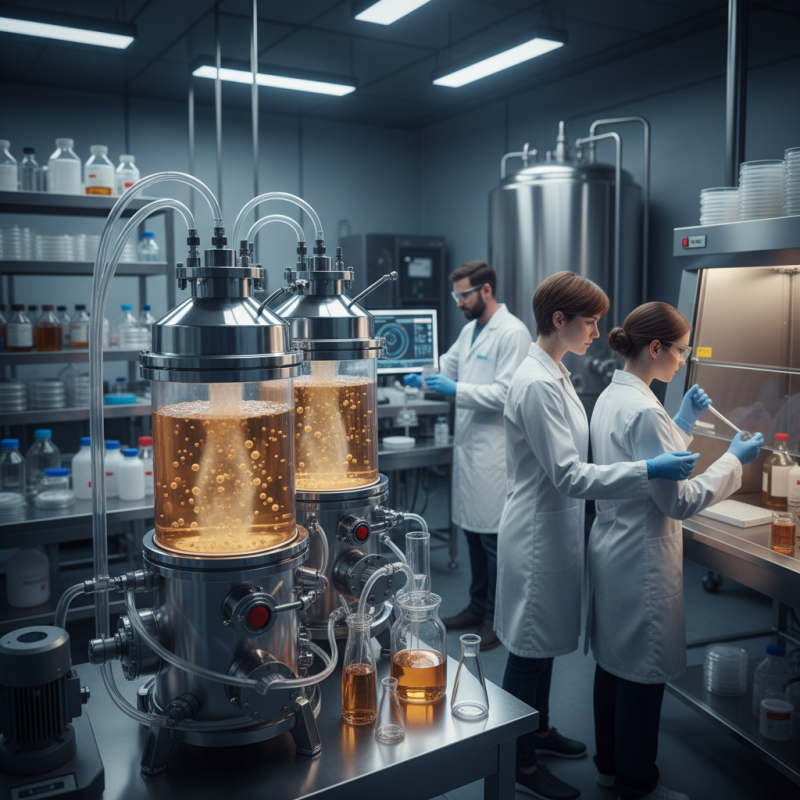
Suspension cell culture has emerged as a pivotal technique in biotech and pharmaceutical research, primarily due to its numerous advantages over adherent culture methods. One of the key benefits is the scalability of suspension cultures, which allows for the production of large cell populations in bioreactors. This scalability is particularly crucial for industrial applications, where the demand for cellular products such as monoclonal antibodies and vaccines is steadily increasing. In contrast, adherent cultures are limited by the surface area of the culture vessel, often constraining cell growth and product yield.
Moreover, suspension cell culture facilitates enhanced nutrient exchange and waste removal, promoting more efficient cell metabolism. The continuous stirring in bioreactors ensures that cells are evenly distributed and exposed to nutrients, leading to a more uniform growth environment. This dynamic environment can improve the overall viability and productivity of the cultures compared to adherent systems, where cells can become crowded and starved for resources. Consequently, the advantages of suspension cell culture make it an indispensable approach in the rapidly evolving fields of biotechnology and pharmaceuticals, enabling researchers to meet the challenges of developing effective therapies and treatments.
Advantages of Suspension Cell Culture Over Adherent Culture
Future Trends and Innovations in Suspension Cell Culture Techniques
Suspension cell culture techniques are witnessing rapid advancements, positioning themselves as a cornerstone for future biotechnology and pharmaceutical research. As the demand for scalable and high-throughput systems increases, innovations such as bioreactor optimization and automated cell culture processes are becoming essential.
These developments not only enhance productivity but also improve the reproducibility of experiments, leading to more reliable results in drug development and vaccine production.
Moreover, the integration of advanced technologies such as CRISPR and synthetic biology in suspension cell cultures is paving the way for tailored therapeutic solutions. Researchers are exploring the possibilities of genetically engineered cell lines that can express complex proteins or metabolites at unprecedented levels. Additionally, the adoption of artificial intelligence and machine learning in monitoring and controlling culture conditions promises to further streamline processes, reducing the time and costs associated with research and development in the biotech industry.