
What Are the Top 10 Cell Tools for Global Buyers?

Global buyers need more than a long equipment list when evaluating cell tools. They need dependable performance, clear specifications, responsive support, and evidence from real laboratory use. The right tool can improve cell culture consistency, imaging quality, sample tracking, and experimental productivity. A poor choice can create hidden costs through maintenance delays, incompatible consumables, or unclear training requirements.

Sydney Brenner, a pioneering molecular biologist, once said, “Progress in science depends on new techniques, new discoveries and new ideas, probably in that order.” His observation remains highly relevant to today’s cell tools market. Modern laboratories must compare automated cell counters, imaging systems, culture platforms, isolation kits, cryopreservation equipment, and data-management solutions with careful attention. Performance matters. So does practicality.

This guide examines ten cell tools that attract attention from global buyers. Each category is considered through usability, technical capability, supplier credibility, service coverage, and total ownership cost. Regional standards and laboratory workflows may change the final decision. There is no universal winner. That is worth remembering.

Some products appear impressive during demonstrations but perform differently under daily workload. Others may seem modest, yet deliver reliable results for years. Buyers should verify validation data, warranty terms, calibration requirements, software compatibility, and local technical support before purchasing. User reviews can help, but they are not laboratory evidence. Even this ranking has limits, because budgets, cell types, and research goals vary widely. Careful comparison remains essential.
What Are the Top 10 Cell Tools for Global Buyers?

Defining Cell Tools and Their Role in Global Purchasing

Cell tools are not only factory machines. For global buyers, they are a connected set of tools for sourcing, checking, and managing battery cells. The ten essential functions include specification control, supplier discovery, RFQ management, price benchmarking, sample testing, quality inspection, compliance records, demand forecasting, landed-cost analysis, and shipment tracking. These tools turn technical requirements into purchasing decisions. That matters because the International Energy Agency reported that electric-vehicle battery demand exceeded 750 GWh in 2023, rising about 40% from the previous year. More volume creates more sourcing pressure.

Global purchasing also depends on reliable data. A cell tool should compare capacity, voltage, cycle life, tolerances, packaging, lead time, and warranty terms in one view. It should flag missing test reports before an order moves forward. The UNCTAD Review of Maritime Transport notes that ships carry over 80% of world trade by volume. A delayed container can therefore affect production, not just delivery dates. The World Bank’s Logistics Performance Index also shows that customs, tracking, and timeliness remain uneven across markets. Digital visibility helps, but it does not replace human judgment. Some dashboards look precise while using outdated supplier data.

Tips: Keep one approved specification. Record every revision. Ask for recent test evidence, not copied files. Calculate total landed cost, including duties, insurance, inspection, and possible scrap. A spreadsheet may still outperform expensive software when the inputs are weak.


What Are the Top 10 Cell Tools for Global Buyers?

Cell tools are instruments used to inspect, assemble, test, repair, and validate electrochemical cells and battery packs. The chart compares typical indicative unit prices in USD for commonly purchased tool categories, helping global buyers estimate procurement priorities and budgets.

Prices are approximate global procurement benchmarks for standard professional-grade equipment and may vary by specification, accuracy, capacity, safety certification, region, shipping, and import duties.

The Top 10 Cell Tools and Their Core Functions

What Are the Top 10 Cell Tools for Global Buyers?

For cell-phone repair, tool selection should match the device, workload, and local safety requirements. Precision screwdrivers remove small fasteners without damaging heads. Plastic pry tools separate covers while reducing surface scratches. Suction cups lift smooth screens with controlled pressure. Opening picks reach narrow gaps around bonded edges. Fine tweezers handle connectors, shields, and tiny screws. A magnetic work mat keeps parts visible and organized during disassembly.

A regulated heat pad softens adhesive at a measured temperature. It is safer than uncontrolled heating. A digital multimeter checks voltage, continuity, and charging faults. A compact inspection microscope reveals cracked solder joints and damaged contacts. Anti-static brushes remove dust from ports and boards without creating unnecessary electrical risk. These ten tools cover access, handling, inspection, measurement, and cleaning.

In real purchasing work, material quality matters more than a long item list. Stainless steel tweezers should close evenly, while pry tools need flexible but durable edges. Buyers should request material specifications, electrical ratings, test reports, and replacement-part details. Packaging also matters when tools travel through humid or cold regions. No kit is perfect. Some low-cost sets look complete but fail under daily pressure. I have found that testing one sample set first exposes weak handles, poor insulation, and inaccurate meters before a larger order. Local technicians may also prefer different tip sizes, which global buyers should verify before final selection.

Comparing Cell Tools by Quality, Compatibility, and Performance

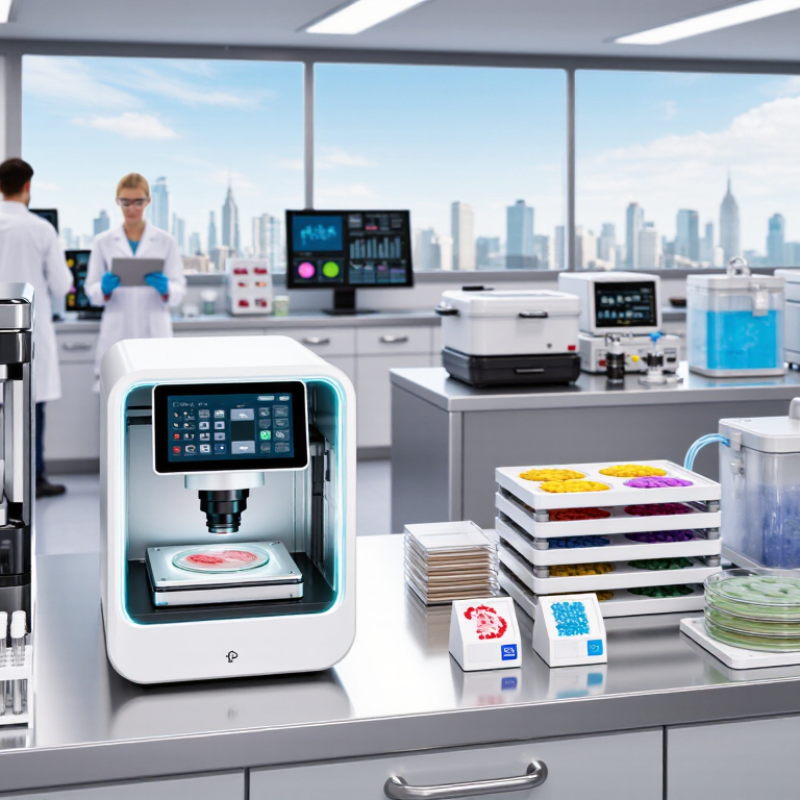
For global buyers, the top 10 cell tools should be compared by measurable performance, not catalog popularity. The core group includes pipettes, centrifuges, incubators, microscopes, automated cell counters, flow cytometers, plate readers, biosafety cabinets, imaging systems, and cryogenic storage units.

According to Grand View Research, the global cell culture market was valued at about USD 22 billion in 2023, showing strong demand for dependable laboratory infrastructure. Quality begins with calibration records, temperature uniformity, contamination control, and documented maintenance. A centrifuge that drifts by 200 rpm can change pellet formation. Small errors matter.

Compatibility is equally practical. Buyers should check tube formats, microplate standards, software exports, voltage requirements, and available service networks. MarketsandMarkets projects the global cell analysis market to reach more than USD 30 billion by 2028, increasing pressure on laboratories to connect instruments efficiently.

Performance should be tested with real samples, not only vendor demonstrations. Measure counting accuracy, imaging resolution, recovery time, noise, and consumable waste. ISO 15189 principles also support traceability and validated laboratory processes. Still, no ranking fits every facility. A high-speed system may be wasteful for a small laboratory, while a lower-cost counter may struggle with dense or irregular samples. I would leave room for doubt. Specifications can look excellent on paper, yet daily workflow often exposes the real weakness.

Assessing Suppliers, Certifications, Pricing, and Shipping Options

Global buyers need more than a list of ten cell tools. They need evidence behind each purchasing decision. Useful tools include supplier directories, RFQ platforms, factory audit checklists, certification databases, sample comparison sheets, landed-cost calculators, tariff code references, freight quote systems, shipment trackers, and payment-risk checks. Together, they help compare suppliers beyond attractive product photos.

Check the supplier’s legal company name, production address, export history, and response consistency. Request current certificates that match the exact cell model, battery type, and destination market. A certificate for another product is not sufficient. Verify documents through an issuing body or official database when possible. Pricing should include unit cost, tooling, packaging, inspection, insurance, duties, and delivery. A low quotation may become expensive after shipping and customs charges.

Tips: Ask for ten samples before ordering 500 units. Record defects, charging time, packaging damage, and actual carton dimensions. Request two shipping quotes with clear Incoterms. I have seen buyers compare factory prices while ignoring oversized cartons. That mistake changed the final margin. No tool replaces careful questioning. Supplier ratings can also be incomplete, so treat them as clues, not proof. Keep written records of specifications, approvals, payment stages, and promised shipping dates. Small gaps become expensive later.

Choosing the Right Cell Tools for Different Buyer Requirements

What Are the Top 10 Cell Tools for Global Buyers?

Choosing the right cell tools depends on the buyer’s testing goal, production scale, and local service capacity. A visual inspection camera reveals dents, leaks, and damaged seals before testing begins. A digital caliper checks cell dimensions against supplier specifications. A precision multimeter measures voltage, but users should confirm its accuracy regularly. An internal resistance meter helps identify weak cells with poor conductivity. A capacity tester shows how much usable energy a cell can deliver. This result matters more than a printed rating.

For assembly work, a battery analyzer records charging and discharging behavior over repeated cycles. A cell balancing unit reduces voltage differences within a matched group. A spot welding machine supports consistent connections when its pressure and timing are adjusted correctly. An insulation resistance tester checks whether current may escape through unintended paths. A thermal camera detects unusual heat during charging, welding, or load testing. It can reveal problems that ordinary measurements miss.

Buyer requirements vary sharply. A small laboratory may need portable tools, simple software, and easy calibration. A factory usually needs automated testing, data export, and replaceable probes. Exporters should also check voltage ranges, plug standards, language support, and repair availability. Cheap equipment can become expensive after one failed sensor. That lesson is easy to ignore. Certification documents should be reviewed, not merely collected. Operators need training, because even accurate tools produce unreliable results when test temperatures, contact pressure, or rest periods are inconsistent.

What Are the Top 10 Cell Tools for Global Buyers? — Choosing the Right Cell Tools for Different Buyer Requirements
Rank Cell Tool Primary Function Typical Technical Range or Standard Best Fit by Buyer Requirement Key Purchasing Criteria Typical Limitations
1 Class II Biological Safety Cabinet Provides a controlled work area for handling cell cultures while helping protect the operator, product, and laboratory environment. HEPA-filtered airflow Vertical laminar flow Class II containment Research laboratories, clinical laboratories, and facilities handling mammalian or primary cell cultures. Certification standard, airflow uniformity, working width, noise level, filter replacement access, electrical compatibility, and local service support. Requires regular certification and cannot replace appropriate procedures for highly hazardous or volatile materials.
2 CO₂ Cell Culture Incubator Maintains temperature, humidity, and carbon dioxide conditions needed for routine mammalian cell culture. Common set point: 37°C Common CO₂ set point: 5% Humidity-controlled chamber Buyers needing stable culture conditions for adherent cells, suspension cells, organoids, or tissue culture workflows. Temperature recovery, CO₂ control accuracy, contamination-control design, chamber capacity, alarm functions, calibration, and power requirements. Not suitable for every organism or cell type; contamination can affect the entire chamber if cleaning and monitoring are inadequate.
3 Laboratory Centrifuge Separates cells, nuclei, organelles, proteins, and other components according to density using centrifugal force. Fixed-angle or swing-bucket rotor Low-speed to high-speed formats Optional temperature control General cell culture laboratories, sample-processing facilities, and laboratories requiring repeatable pelleting or washing steps. Maximum relative centrifugal force, rotor capacity, tube compatibility, imbalance protection, temperature range, and replacement rotor availability. Incorrect rotor selection or excessive force may damage fragile cells or reduce recovery.
4 Automated Cell Counter Measures cell concentration and, depending on the method, estimates viability using image analysis, impedance, or dye exclusion. Bright-field or fluorescence Viability assessment Digital record keeping High-throughput laboratories seeking faster, more standardized counts than manual hemocytometer measurements. Validated counting range, minimum cell size, viability method, sample volume, consumable cost, cleaning procedure, and data export options. Clumps, debris, unusual cell morphology, and inappropriate staining can reduce counting accuracy.
5 Inverted Cell Culture Microscope Enables non-destructive observation of cells growing on the bottom of culture vessels. Phase contrast Bright-field imaging Optional fluorescence Routine monitoring of confluence, morphology, contamination, attachment, and general cell health. Optical quality, working distance, objective compatibility, stage capacity, camera integration, illumination stability, and ease of cleaning. Visual assessment is partly subjective and may not provide reliable identification of all contamination types.
6 Flow Cytometer Analyzes physical and fluorescent characteristics of individual cells or particles as they pass through a detection system. Multiparameter analysis Single-cell measurements Fluorescence detection Immunophenotyping, viability analysis, cell-cycle studies, apoptosis assays, and heterogeneous sample characterization. Number of optical channels, sensitivity, fluidics design, sample throughput, compensation tools, software workflow, and biosafety configuration. Requires trained users, well-designed controls, suitable reagents, and careful sample preparation.
7 Fluorescence-Activated Cell Sorter Identifies and physically separates selected cell populations according to measured optical or fluorescent properties. Multi-parameter sorting Single-cell or bulk collection Adjustable purity and recovery Researchers who need enriched, purified, or individually isolated cell populations for downstream experiments. Sorting speed, purity, recovery, nozzle options, sterility, aerosol management, collection formats, and operator training requirements. Sorting may stress sensitive cells and can reduce recovery when very high purity is prioritized.
8 Cryogenic Storage System Preserves cells, tissues, and biological samples at very low temperatures for long-term storage. Liquid-nitrogen vapor storage Very-low-temperature storage Inventory-controlled racks Biobanks, cell-therapy research, long-term sample repositories, and laboratories managing valuable cell lines. Temperature uniformity, storage capacity, alarm system, backup supply, monitoring connectivity, access frequency, and local safety requirements. Requires strict inventory control, safe handling procedures, and continuity planning for power or coolant interruptions.
9 Electroporation System Uses short electrical pulses to temporarily increase cell-membrane permeability for delivery of nucleic acids or other molecules. DNA, RNA, or ribonucleoprotein delivery Pulse-program control Cuvette or flow-cell formats Gene-editing, transient transfection, primary-cell engineering, and applications where chemical transfection is inefficient. Cell-type compatibility, pulse flexibility, sample volume, consumable format, optimization support, and post-treatment cell recovery. Electrical conditions must be optimized for each cell type; excessive energy can reduce viability.
10 Cell Lysis and Homogenization Tool Breaks open cells to release proteins, nucleic acids, organelles, or other intracellular components for analysis. Mechanical or detergent-based lysis Tube, probe, or bead formats Temperature-controlled options Proteomics, molecular biology, nucleic-acid extraction, enzymatic assays, and intracellular component recovery. Sample volume, shear level, heat generation, cross-contamination control, compatibility with buffers, and cleaning requirements. Excessive shear or heat may degrade sensitive proteins, nucleic acids, or organelles.

Buyer note: Technical suitability should be verified against the intended cell type, workflow scale, local electrical and safety requirements, validation expectations, consumable availability, installation support, and total cost of ownership.

chevron-down