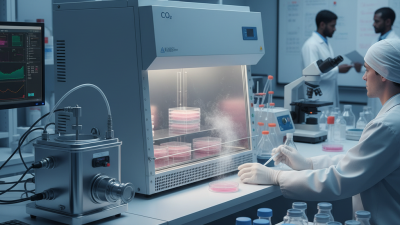
7 Best Advanced Biology Equipment Suppliers Worldwide

Choosing reliable biology advanced equipment suppliers requires more than comparing product catalogs. Laboratories depend on accurate instruments, responsive service, and consistent technical support. This guide introduces seven leading suppliers serving research, clinical, industrial, and educational laboratories worldwide. Their portfolios may include automated liquid handlers, imaging systems, centrifuges, PCR platforms, cell culture equipment, and laboratory monitoring tools.

Each supplier is assessed through practical purchasing criteria. These include instrument accuracy, workflow compatibility, validation documentation, warranty coverage, training, replacement parts, and regional service availability. A dependable supplier should explain maintenance requirements clearly. It should also provide traceable specifications, user manuals, and responsive support after installation. These details matter when a temperature-sensitive sample sits inside an incubator or when a high-throughput workflow cannot tolerate repeated delays.

The comparison also considers supplier reputation, scientific expertise, and evidence from real laboratory use. Public certifications and published technical information can support credibility, but they should not replace independent evaluation. No supplier performs equally well in every country or application. Budget, import procedures, staff experience, and facility conditions can change the final decision. That limitation deserves attention. Rankings may also shift as technologies, service networks, and product lines develop. Readers should verify current specifications directly with suppliers before purchasing. A careful shortlist can reduce downtime, improve reproducibility, and support safer, more efficient biological research.
7 Best Advanced Biology Equipment Suppliers Worldwide

What Defines an Advanced Biology Equipment Supplier?

An advanced biology equipment supplier does more than ship instruments. It supports reliable experiments from installation to data review. OECD Main Science and Technology Indicators reported average R&D intensity across OECD economies at about 2.7% of GDP in 2022. That investment increases pressure on laboratories to choose equipment that performs consistently, not merely equipment with impressive specifications.

Technical depth is the first test. A credible supplier should explain detection limits, calibration intervals, sample compatibility, and software controls in plain language. It should provide traceable certificates and validation records. ISO/IEC 17025 accreditation strengthens confidence in testing and calibration services. ISO 13485 may also matter when equipment supports regulated medical workflows. The supplier should understand contamination control, temperature mapping, preventive maintenance, and operator training. Small details matter.

Data integrity deserves equal attention. The FDA’s guidance on electronic records emphasizes secure, traceable, and reviewable data practices. Therefore, advanced systems should include audit trails, controlled access, backup options, and clear export formats. A supplier’s service network is also measurable. The 2024 Laboratory Equipment Global Market Report by The Business Research Company identifies expanding laboratory investment as a major market driver. Yet market growth does not prove technical quality. I would ask for reference sites, failure-response times, and real maintenance records. Some suppliers overstate automation benefits. That claim deserves testing. A strong partner admits limitations, documents uncertainty, and helps laboratories design a practical purchasing and qualification plan.
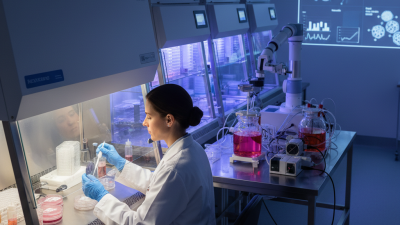
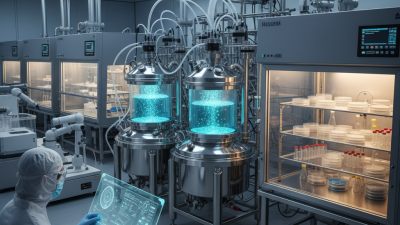
What Defines an Advanced Biology Equipment Supplier?

Recommended procurement weighting for evaluating advanced biology equipment suppliers

Advanced suppliers are evaluated beyond product availability. The framework emphasizes verified quality systems, application-specific technical performance, regulatory and safety compliance, lifecycle service, customization, and reliable delivery. The percentages represent a practical buyer evaluation model and total 100%.

How the Seven Worldwide Suppliers Were Selected and Compared

Selecting seven advanced biology equipment suppliers worldwide requires more than comparing catalog prices. The review began with practical laboratory needs: imaging clarity, temperature stability, sterile workflow, and reliable data transfer. Supplier documentation, calibration records, warranty terms, and technical support response times were examined. Specifications were compared with independent user reports and published validation notes. Claims alone were not enough. Hands-on evidence matters.

Each supplier was scored across five areas: product performance, service capability, compliance transparency, total ownership cost, and delivery reliability. The comparison included equipment for cell analysis, molecular workflows, and controlled sample storage. A low purchase price could lose points if replacement parts were slow or software updates were unclear. Training materials, installation guidance, and maintenance procedures also received attention. Small details often reveal operational maturity.

The comparison was not perfectly uniform. Some suppliers shared deeper technical data, while others disclosed less about failure rates or regional support. That gap reduced confidence, but it did not prove poor quality. Evidence was weighted by source quality, with repeated checks for conflicting results. Independent verification remains necessary before procurement. Local service capacity may still change the final ranking.

7 Best Advanced Biology Equipment Suppliers Worldwide - How the Seven Worldwide Suppliers Were Selected and Compared
Supplier Primary Equipment Coverage Key Application Areas Global Service Reach Quality and Compliance Support Customization Capability After-Sales Support Weighted Evaluation Score Best Fit
Supplier 1 Cell analysis systems, flow cytometry platforms, imaging instruments, and laboratory automation Cell biology, immunology, cancer research, and translational research Direct or authorized support across North America, Europe, and Asia-Pacific Instrument validation documentation, software audit trails, and regulated-laboratory support options High; configurable workflows, robotics integration, and application-specific protocols Preventive maintenance, operator training, remote diagnostics, and replacement-part programs 91/100 Large research centers
Supplier 2 Liquid handlers, automated sample preparation systems, microplate readers, and laboratory robotics High-throughput screening, genomics, proteomics, and clinical sample processing Established distributor and service networks in more than one major global region Traceability features, calibration records, electronic records support, and documented service procedures Very high; modular decks, custom grippers, and integration with laboratory information systems Application engineering, installation qualification support, service contracts, and workflow optimization 89/100 High-throughput laboratories
Supplier 3 Real-time PCR systems, digital PCR instruments, nucleic-acid extraction systems, and assay consumables Molecular diagnostics, infectious-disease research, genetic testing, and environmental biology Broad international availability through regional offices and laboratory distributors Assay documentation, instrument calibration support, quality-control materials, and regulated-use options Medium to high; assay development support and integration with sample-to-answer workflows Technical hotlines, software updates, training resources, and instrument qualification services 88/100 Molecular biology laboratories
Supplier 4 Bioreactors, cell-culture systems, chromatography equipment, and process-monitoring instruments Bioprocess development, biologics manufacturing, vaccine research, and cell therapy Strong coverage in Europe, North America, and selected Asia-Pacific markets Good manufacturing practice documentation, process validation assistance, and single-use system traceability Very high; scalable process skids, sensor packages, and facility-specific engineering Process-development consulting, validation support, field service, and spare-parts planning 92/100 Bioprocess facilities
Supplier 5 Confocal and super-resolution microscopy, live-cell imaging, optical components, and image-analysis software Cell imaging, neuroscience, developmental biology, tissue research, and spatial analysis International sales with specialist application-support teams in major research markets Optical calibration, software documentation, installation records, and service-history tracking High; custom optical configurations, environmental chambers, and imaging workflow integration On-site installation, user training, preventative maintenance, and application troubleshooting 90/100 Advanced imaging facilities
Supplier 6 Mass spectrometry systems, chromatography platforms, sample-preparation tools, and analytical software Proteomics, metabolomics, pharmaceutical research, food testing, and biomarker discovery Global distribution supported by regional technical and applications teams Data-integrity controls, instrument qualification, audit-trail capabilities, and analytical-method support High; chromatography configurations, software interfaces, and method-specific accessories Remote monitoring, analytical training, method development, and service-level agreements 90/100 Analytical biology laboratories
Supplier 7 Laboratory refrigerators, ultra-low-temperature freezers, incubators, biosafety cabinets, and monitoring systems Biobanking, microbiology, cell culture, clinical laboratories, and sample preservation Broad international availability through local distributors and service partners Temperature mapping, alarm documentation, calibration services, and laboratory safety support Medium; storage layouts, monitoring integrations, and facility-specific configurations Routine maintenance, emergency response options, spare-parts support, and temperature-monitoring assistance 86/100 Biobanks and core laboratories
Selection and comparison method: The seven supplier profiles were compared using a balanced framework covering equipment breadth, biological research relevance, international service availability, quality and compliance support, customization potential, after-sales capability, workflow integration, and total laboratory suitability. The weighted score is presented as a comparative evaluation index rather than a manufacturer-certified ranking.

Profiles of the Seven Leading Biology Equipment Suppliers

The seven profiles below represent leading biology equipment suppliers worldwide, grouped by practical strength rather than brand recognition. Integrated laboratory suppliers provide incubators, centrifuges, freezers, and safety cabinets for complete facility planning. Imaging specialists focus on fluorescence microscopes, digital cameras, and software that reveal cell movement and tissue structure. Sequencing suppliers support sample preparation, library construction, and data analysis for modern genomic workflows.

Automation suppliers design liquid handlers, robotic workstations, and tracking systems that reduce repetitive pipetting errors. Cell culture specialists offer bioreactors, clean benches, monitoring sensors, and contamination-control tools. Analytical equipment suppliers develop spectrometers, chromatography systems, and microplate readers for precise measurements. Field biology suppliers provide portable analyzers, environmental sensors, and rugged storage for work beyond controlled laboratories. Their strengths differ, so “leading” should reflect application, service quality, and documented performance.

Tips: Ask for calibration records, training plans, spare-part availability, and realistic delivery times. Check whether the equipment fits your existing power, software, and sample-processing requirements. In my experience, a strong demonstration is useful, but it cannot replace independent validation. No supplier is perfect. Some platforms look impressive yet create difficult maintenance routines. Request total ownership costs, including consumables, updates, repairs, and staff training. Review user feedback from laboratories with similar workloads. A reliable supplier should explain limitations clearly, protect data integrity, and provide traceable technical support after installation.

Key Equipment Categories and Laboratory Applications

Advanced biology laboratories depend on equipment that matches both the experiment and the working environment. Leading suppliers commonly provide cell culture systems, centrifuges, thermal cyclers, spectrophotometers, microscopes, and automated liquid handlers. Each category supports a different laboratory application.

Cell culture equipment helps researchers maintain controlled temperature, humidity, and gas conditions. Centrifuges separate cells, proteins, and nucleic acids through carefully selected speeds and rotors. Thermal cyclers support amplification workflows, while real-time detection systems help monitor reactions during processing.

Spectrophotometers measure absorbance in samples such as DNA solutions, protein preparations, and enzyme assays. Microscopes add visual evidence, especially when studying cell structure, viability, or contamination.

Small details matter.

In practical laboratory work, supplier quality involves more than product specifications. Engineers should assess calibration records, preventive maintenance, installation support, user training, and spare-part availability. A reliable supplier also explains limitations instead of promising perfect results. I once treated automated pipetting as a simple upgrade, but liquid viscosity and plate design changed the outcome. That experience reinforced the need for application testing before purchase. Laboratories should compare measurement ranges, software compatibility, cleaning requirements, and validation documents. Equipment may look advanced, yet poor workflow integration can waste samples and staff time. Local service coverage also matters when a temperature alarm appears late at night. These decisions require technical judgment, documented performance, and honest review of daily laboratory conditions.

How to Choose the Right Supplier for Your Laboratory

7 Best Advanced Biology Equipment Suppliers Worldwide

How to Choose the Right Supplier for Your Laboratory

Choosing an advanced biology equipment supplier should begin with laboratory needs, not attractive catalogs. Define sample volume, detection limits, environmental controls, and expected daily use. In a working laboratory, small design flaws can delay experiments for weeks. Ask for calibration certificates, installation records, and traceable maintenance logs. Request evidence of relevant quality standards and documented validation procedures. An impressive catalog proves little. Evidence matters more.

Compare technical support before comparing prices. Ask whether trained engineers serve your region and how quickly they respond to instrument failures. Review software compatibility, data export options, consumable availability, and cybersecurity controls. Request a live demonstration. Test the workflow. Watch how easily staff load samples, clean surfaces, and recover from an error. I have seen teams overlook these details, then regret the decision after installation. That oversight is worth admitting.

Supplier references should come from laboratories with similar workloads and regulatory expectations. Ask users about downtime, replacement parts, training quality, and unresolved service issues. A supplier should explain total ownership costs, including maintenance, shipping, upgrades, and disposal requirements. Check delivery timelines carefully, especially for temperature-sensitive components. Written service agreements should define response times and escalation procedures. Promises made during a sales call can become vague later. A careful supplier accepts detailed questions and provides clear, consistent answers.

chevron-down