2026 Top Types of Magnesium Oxide Powder for Global Buyers
Magnesium Oxide Powder remains a practical material for global manufacturers in 2026. Buyers use it in refractories, animal nutrition, agriculture, water treatment, rubber, and chemical processing. However, the right grade depends on more than its basic chemical formula. Particle size, purity, reactivity, bulk density, ignition loss, and packaging can change performance significantly.
This guide introduces the main types of Magnesium Oxide Powder available to international buyers. It examines light magnesium oxide, heavy magnesium oxide, reactive grades, industrial grades, feed grades, and higher-purity options for controlled applications. Each type has a different handling profile. Light grades may offer higher surface area, while heavy grades often support easier storage and dosing. Reactive material can work faster, but it may also require tighter moisture control during transport.
Real purchasing decisions need evidence. Suppliers should provide current certificates of analysis, safety data sheets, traceability records, and reliable test results. Buyers should verify applicable food, feed, pharmaceutical, environmental, and import requirements before ordering. Small differences matter. A damp bag can tell an expensive story.
This article also considers supplier experience, production consistency, and technical support. Laboratory data is valuable, but factory trials often reveal practical issues. No catalog is perfect. Grade names can vary between regions, and some descriptions remain surprisingly unclear. Therefore, global buyers should compare specifications carefully, request representative samples, and confirm performance under actual operating conditions. The goal is not to choose the most advanced powder, but the most suitable and dependable one.
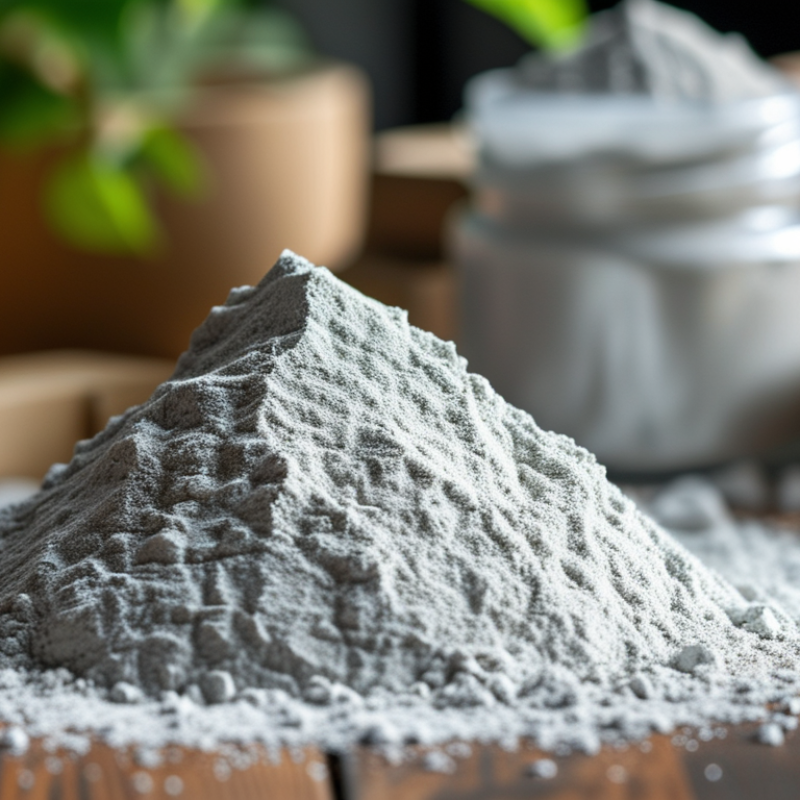
What Is Magnesium Oxide Powder and Why Does Its Type Matter?
Magnesium oxide powder is an inorganic material produced by calcining magnesite, brucite, or magnesium hydroxide. Its chemical formula is MgO. The USGS Mineral Commodity Summaries 2025 estimates global magnesite mine production at approximately 29 million metric tons in 2024. China contributed nearly two-thirds of this volume, showing the scale of upstream supply.
Its type matters because calcination temperature changes reactivity, porosity, and bulk density. Light-burned magnesium oxide usually has higher surface area and reacts faster. It suits water treatment, animal nutrition, and selected chemical processes. Dead-burned material is denser and less reactive. It performs better in refractory applications requiring heat resistance. Fused magnesium oxide offers even higher purity and stable crystal structure. Heavy grades may provide easier handling and lower dust during industrial batching.
A higher assay is not automatically better. That assumption often fails. Buyers should examine ignition loss, chloride content, particle-size distribution, moisture, and BET surface area. ISO 9277 provides a recognized method for measuring specific surface area. Suppliers should also provide recent batch data, traceability records, and safety documentation. The exact boundary between “light” and “heavy” grades is not perfectly uniform worldwide. This creates avoidable purchasing errors. A powder with 98% MgO may still perform poorly if its reactivity does not match the process. Small differences become visible in a mixing tank, kiln, or storage silo. Practical sampling remains essential.
How Are Magnesium Oxide Powders Classified by Purity and Reactivity?
2026 Top Types of Magnesium Oxide Powder for Global Buyers
How Are Magnesium Oxide Powders Classified by Purity and Reactivity?
Magnesium oxide powder is not classified by purity alone. Buyers should examine chemical grade, particle size, surface area, and reactivity. Industrial-grade MgO often contains 85–98% MgO, while high-purity grades can exceed 99%. The correct choice depends on the final application, not only the assay number.
Reactivity describes how quickly MgO reacts with water, acids, or process additives. Light-burned MgO usually has higher surface area and reacts faster. Dead-burned MgO is denser, more stable, and better suited to refractory products. Caustic-calcined material sits between these groups. The distinction matters. A powder with 99% MgO may still perform poorly if its reactivity is unsuitable.
USGS Mineral Commodity Summaries 2025 reported approximately 18 million metric tons of magnesite production from China in 2024. This scale shows why supply consistency deserves attention. However, production volume does not guarantee uniform powder performance. Testing remains essential.
Tips: Ask for MgO assay, loss on ignition, particle-size distribution, bulk density, and reactivity results. Request recent batch data. Compare test methods carefully. “High purity” can be vague. A practical mistake is choosing the cleanest powder without checking reaction speed, moisture sensitivity, or furnace temperature. I would also verify samples under real process conditions, because laboratory results can look better than factory performance.
2026 Top Types of Magnesium Oxide Powder for Global Buyers - How Are Magnesium Oxide Powders Classified by Purity and Reactivity?
| Magnesium Oxide Type | Typical MgO Purity
(wt.%) | Typical Reactivity | Indicative BET Surface Area
(m²/g) | Typical Bulk Density
(g/cm³) | Common Particle-Size Range | Typical Characteristics | Common Industrial Uses |
Standard Light-Burned
(Caustic-Calcined) MgO | 85–95 | High | 5–25 | 0.35–0.65 | Typically 90% passing 45–150 μm | Produced at relatively moderate calcination temperatures; porous particles and rapid reaction with acids or water-based systems. | Animal-feed mineral supplements, wastewater treatment, fertilizers, pulp and paper, and chemical processing. |
| High-Purity Reactive MgO | 97–99.5 | High to very high | 8–35 | 0.30–0.60 | Commonly 90% passing 45–100 μm | Low levels of silica, calcium, iron, and other mineral impurities; high surface activity and consistent acid neutralization. | Pharmaceutical and technical formulations, specialty chemicals, environmental treatment, and high-purity ceramics. |
| Heavy-Burned MgO | 90–98 | Moderate | 1–8 | 0.60–0.95 | Typically 90% passing 75–250 μm | Denser and less porous than light-burned MgO; offers a balance between chemical activity and storage stability. | Rubber compounds, fertilizers, construction chemicals, industrial neutralization, and selected ceramic formulations. |
| Dead-Burned MgO | 95–99.5 | Low | 0.1–2 | 0.90–1.30 | Commonly 45–500 μm before further processing | Fired at high temperatures to reduce porosity and chemical reactivity; high refractoriness and thermal stability. | Basic refractory bricks, monolithic refractories, furnace linings, and high-temperature metallurgical applications. |
| Fused MgO | 96–99.5 | Very low | Below 1 | 1.00–1.45 | Available as coarse grains, granules, or fine powder | Electrically melted and solidified; dense crystals, low porosity, high purity, and excellent resistance to thermal shock. | Premium refractories, electrical insulation, high-temperature ceramics, and specialized furnace components. |
| Fine or Micronized MgO Powder | 90–99.5 | Low to high, depending on calcination history | 1–30 | 0.25–0.80 | D50 commonly 1–20 μm | Small particle size improves dispersion and can increase apparent reaction speed, although calcination temperature remains a major reactivity factor. | Coatings, polymer compounds, catalysts, ceramics, specialty cement, laboratory formulations, and surface-treated products. |
Data note: The figures shown are typical commercial ranges for comparison only. Actual values depend on raw material, calcination temperature and residence time, milling method, particle-size distribution, and the test method used. Buyers should confirm MgO assay, loss on ignition, impurity limits, particle size, bulk density, and reactivity using the supplier’s current technical specification.
What Are the Main Types of Magnesium Oxide Powder in 2026?
Magnesium oxide powder is not one uniform material. In 2026, global buyers commonly compare light magnesium oxide, heavy magnesium oxide, and high-purity grades. Each type has different density, reactivity, and processing behavior.
Light magnesium oxide has a porous structure and lower bulk density. It reacts more readily and suits rubber compounds, ceramics, fertilizers, and selected chemical processes. Heavy magnesium oxide contains denser particles and usually handles better in applications requiring stable filling or controlled dosing. High-purity magnesium oxide is tested for lower levels of iron, calcium, chlorides, and other impurities. It is often considered for technical ceramics, electrical insulation, and specialized formulations.
Calcined magnesium oxide is another important category. Its reactivity depends strongly on burning temperature, residence time, and particle size. Low-temperature calcined grades generally react faster, while harder-burned material reacts more slowly. This difference can affect slurry stability and final product strength. Particle size also matters. Fine powder may disperse quickly, but it can create dust and complicate feeding. Coarser powder may flow better. Not always.
Reliable purchasing requires more than reading “high purity” on a specification sheet. Buyers should request test data for assay, loss on ignition, bulk density, particle distribution, and reactivity. Storage conditions deserve attention too. Magnesium oxide can absorb moisture and carbon dioxide during long storage. A dry warehouse, sealed packaging, and batch-level inspection reduce surprises. One practical warning remains: two powders with similar chemical assays may perform very differently in production. Testing the actual application is still necessary.
Which Magnesium Oxide Type Fits Different Global Industries?
Magnesium oxide selection depends on process conditions, not merely purity. A 2025 USGS report estimated global magnesite mine production at roughly 27 million metric tons in 2024. This large supply base still hides major differences in reactivity, density, and particle size.
Caustic-calcined magnesium oxide suits agriculture, wastewater treatment, and chemical processing. It reacts relatively quickly with acids and water. Farmers often prefer controlled reactivity for soil and feed applications. Light-burned grades offer higher surface area, while heavier grades support easier handling and dosing. Small details matter.
Dead-burned magnesium oxide fits refractory linings, steel furnaces, and high-temperature ceramics. It provides stronger resistance to heat and chemical attack, but reacts slowly. Fused magnesium oxide is even denser and more stable, making it useful for electrical insulation and demanding furnace components. A 2024 technical market analysis reported that refractories remain one of the largest magnesium oxide end-use sectors globally, reflecting steelmaking’s continued material demand.
Buyers should check ignition loss, bulk density, particle distribution, chloride content, and test temperature. Certificates alone may not predict field performance. We have seen apparently similar powders behave differently after storage in humid warehouses. That is an overlooked risk. Pilot testing under actual mixing, drying, or firing conditions remains the safer choice.
2026 Top Types of Magnesium Oxide Powder for Global Buyers
Which Magnesium Oxide Type Fits Different Global Industries?
How to interpret the chart: The thermal-processing range is a practical indicator of reactivity, density, and high-temperature stability. These broad industry ranges can vary according to raw material quality and manufacturing specifications.
Caustic-Calcined MgO
High reactivity; commonly used in agriculture, wastewater treatment, animal nutrition, and chemical processing.
Hard-Burned MgO
Moderate reactivity and improved stability; suitable for construction materials, environmental treatment, and selected refractory formulations.
Dead-Burned MgO
Low reactivity and high thermal stability; widely selected for refractory bricks, steelmaking, and furnace linings.
Fused MgO
Very high purity and crystal stability; used in premium refractories, electrical insulation, and demanding high-temperature applications.
How Should Buyers Compare Quality, Compliance, Packaging, and Suppliers?
Global buyers usually compare magnesium oxide powder by application, not by “purity” alone.
Light magnesium oxide offers higher surface area and faster reactivity. Heavy magnesium oxide supports denser filling and easier handling. Reactive grades suit water treatment, agriculture, and chemical processing. Food or pharmaceutical grades require tighter impurity controls. The USGS Mineral Commodity Summaries 2024 notes that magnesium compounds are traded through several mineral categories, so customs data may not distinguish every powder grade. That limitation matters.
Ask suppliers for a recent certificate of analysis, test method, and batch number. Check MgO content, calcium, iron, lead, arsenic, moisture, particle size, and bulk density. ISO 9001 certification supports process control, but it does not prove product suitability. For food use, compare specifications with relevant food-additive requirements and request traceability records. For European shipments, verify REACH status and the correct safety data sheet. Compliance paperwork can look complete while missing the actual grade.
Packaging affects quality before arrival. Multiwall bags with sealed inner liners protect powder from humidity. Pallets should be wrapped, labeled, and photographed before loading. Ask about container cleanliness and desiccant use. The International Trade Centre reports magnesium oxide under customs classifications that can combine different commercial forms, making supplier-level verification essential. Compare at least three production batches, not one attractive sample. I would also inspect caking after storage, because laboratory results rarely show warehouse behavior. This is where many purchasing decisions become too optimistic.