How to Use Plant Growth Regulators for Maximum Crop Yields?
In modern agriculture, maximizing crop yields is essential for food security. One effective approach is the use of Plant Growth Regulators (PGRs). These substances play a vital role in enhancing plant development. They help adjust growth patterns and improve stress resistance.
PGRs can be employed to manipulate various physiological processes in crops. However, their impact can vary based on several factors, including crop type and environmental conditions. Understanding these variables is crucial for effective application. Farmers must be cautious and well-informed. Overuse or incorrect timing can lead to detrimental effects.
The science behind PGRs is fascinating but complex. Research continues to uncover new benefits and potential drawbacks. Engaging with experts and field trials can provide insights. As agriculture evolves, the role of Plant Growth Regulators may reshape sustainable practices and influence future crop production strategies.
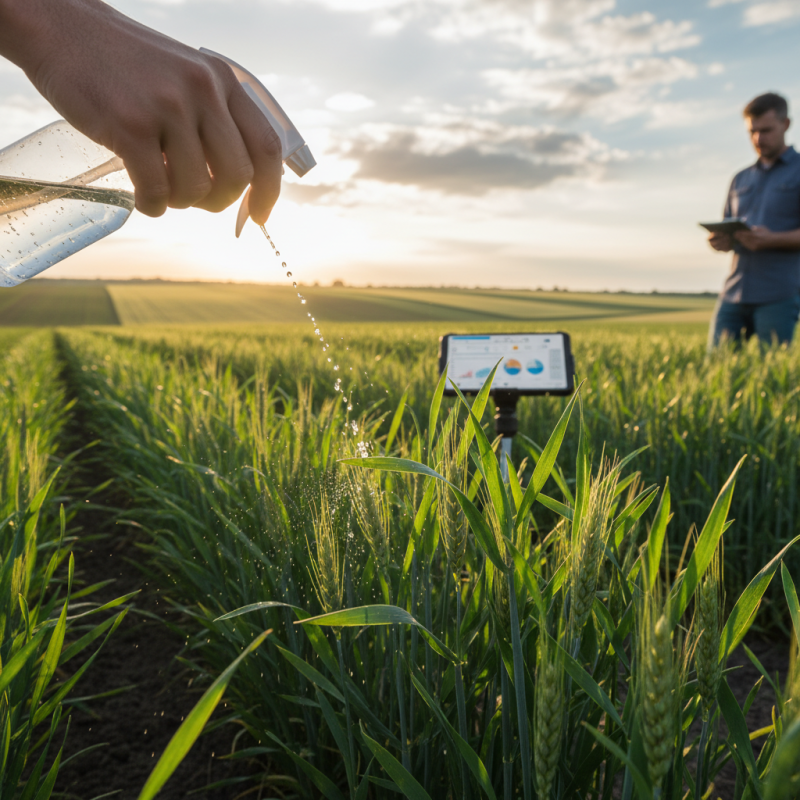
Understanding Plant Growth Regulators: Types and Functions
Plant growth regulators (PGRs) are crucial in modern agriculture. They can enhance crop yields significantly. PGRs are classified mainly into auxins, gibberellins, cytokinins, and ethylene. Each type has unique functions that affect plant growth. Auxins, for instance, promote cell elongation and root development. This helps plants absorb more nutrients and water.
Recent studies indicate that the use of gibberellins can increase the size of fruits and grains. According to a 2021 report from the Food and Agriculture Organization, proper use of PGRs can lead to a yield increase of up to 20% in crops like wheat and rice. Farmers face challenges in timing and application rates, which are critical for effectiveness. Improper usage can lead to stunted growth or poor crop quality.
Cytokinins play a role in cell division and delay leaf aging. Some growers notice improved fruit set when cytokinins are applied. However, research highlights that excessive application may cause adverse effects, such as abnormal growth patterns. PGRs offer immense potential when used wisely, but they require careful management and understanding.
How to Use Plant Growth Regulators for Maximum Crop Yields?
| Type of Plant Growth Regulator | Function | Recommended Application Rate (per hectare) | Optimal Timing |
| Gibberellins | Promote stem elongation and seed germination. | 1-5 g | Before flowering |
| Auxins | Encourage root formation and fruit development. | 2-10 L | During early flowering |
| Cytokinins | Stimulate cell division and delay leaf senescence. | 0.5-2 L | At the vegetative stage |
| Ethylene | Aids in fruit ripening and abscission. | 100-200 g | Before harvest |
| Brassinosteroids | Enhance stress tolerance and promote growth. | 0.1-1 g | Throughout growth period |
The Role of Auxins, Gibberellins, and Cytokinins in Crop Yield
Auxins, gibberellins, and cytokinins are essential plant growth regulators that play significant roles in enhancing crop yields. Auxins are vital for cell elongation and root development. Studies show that using auxins can increase root biomass by up to 30%. This improved root structure allows plants to access more nutrients and water, essential for growth.
Gibberellins promote stem elongation and seed germination. Research indicates that crops treated with gibberellins can achieve a yield increase of approximately 15-20%. This efficiency is crucial for crops like barley and wheat, where height can directly impact the harvest. However, over-application of gibberellins can lead to lodging issues, resulting in reduced yields.
Cytokinins, on the other hand, encourage cell division and shoot growth. They play a role in delaying leaf senescence, allowing plants to photosynthesize for longer periods. Reliable data suggests that the application of cytokinins can boost yields by around 12%. Despite their benefits, improper usage can lead to imbalances in plant growth, creating challenges for farmers. Monitoring the application rates and understanding the specific needs of each crop remains vital for optimal results.
Application Techniques: Timing and Dosage for Maximum Efficacy
Proper timing and dosage are crucial when using plant growth regulators (PGRs) to enhance crop yields. Applying these substances can promote growth, improve fruit set, and increase resistance to stress. However, mismanagement can lead to unexpected outcomes, like stunted growth or reduced yield.
It's essential to understand the growth stage of your crops. Early application can be beneficial for some plants, while others require treatment at flowering or fruiting stages. Keep in mind that environmental factors like temperature and humidity also affect PGR efficacy. Always check local conditions to adjust your timing.
Dosage is another critical factor. Too much can harm your plants, while too little may not yield noticeable results. Start with lower concentrations to gauge the response. Gradually adjust based on what you observe.
Tips: Always test a small area before wide-scale application. This practice allows you to evaluate the impact without risking the entire crop. Document everything you observe to refine your approach in future seasons.
Impact of Plant Growth Regulators on Specific Crop Types and Conditions
Plant growth regulators (PGRs) have a significant impact on various crops. Their effects vary depending on the type of plant and environmental conditions. For instance, a study by the American Society of Agronomy found that the application of PGRs like auxins can improve root development in tomato plants. This can lead to a yield increase of up to 20%. Such data emphasizes the need for targeted use of PGRs according to specific crops.
Different crops respond uniquely to PGRs. For example, wheat and corn often demonstrate improved drought resistance with certain regulators. In trials, corn treated with gibberellins showed a 15% increase in kernel weight. However, the improper application can lead to reduced yields or unwanted growth patterns. This highlights the importance of precision in application methods and timing.
Environmental factors also influence PGR effectiveness. Temperature, humidity, and soil type must be considered when planning their application. Some regulators might fail in adverse conditions, leading to variability in crop performance. Understanding these nuances is crucial for farmers aiming to maximize outputs and reduce risks.
Impact of Plant Growth Regulators on Crop Yields
Assessing the Economic Benefits of Using Growth Regulators in Agriculture
Plant growth regulators (PGRs) have been increasingly recognized for their potential to enhance crop yields. Data from the Food and Agriculture Organization indicates that PGRs can increase yields by 10-30%. These regulators influence various growth processes, such as cell division and elongation. This leads to more robust plants that are better equipped to resist stressors.
The economic impact of using PGRs in agriculture is notable. A report from the American Society of Agronomy shows that farmers can see a return on investment of $3 to $6 for every dollar spent on PGRs. This can significantly improve profit margins and contribute to efficient resource use. However, it's essential to consider the cost of application and potential environmental impacts.
Farmers must assess their specific needs and crop types before using PGRs. Misapplication or overuse may lead to diminished returns or crop stress. Aligning PGR use with proper agronomic practices is crucial. Understanding the local soil conditions and climate can further enhance efficacy. Balancing benefits and drawbacks requires careful planning.