Why Choose Atomized Metal Powder for Global Sourcing?
Why Choose Atomized Metal Powder for Global Sourcing?
Global sourcing is not simply a search for the lowest price. It is a technical decision involving consistency, documentation, logistics, and production risk. Atomized Metal Powder can offer controlled particle shapes, stable chemistry, and reliable flow behavior when the supplier uses disciplined production methods. A fine powder should move smoothly through a feeder, fill a die evenly, and produce repeatable density after processing. Small differences matter.
Powder-metallurgy authority Randall M. German has described the field as “the art and science of producing useful engineering components from metallic powders.” That perspective remains practical today. It connects laboratory control with real factory performance. Buyers should examine atomization technology, particle-size distribution, oxygen content, tap density, and batch-to-batch test records. A bright certificate alone is not enough. Ask how samples were tested, stored, and traced.
The best global supplier also understands the journey beyond the factory gate. Moisture barriers, sealed containers, clear labeling, and predictable export documentation protect powder quality during long-distance transport. A shipment can look perfect and still perform poorly if storage conditions were ignored. This is where experience becomes visible. Sometimes, the cheapest quote deserves another question. Does it include inspection, technical support, and corrective-action response?
A strong sourcing strategy compares verified performance, not promises. It also leaves room for doubt. No supplier is flawless, and qualification should continue after the first successful order. That cautious approach helps manufacturers choose Atomized Metal Powder with greater confidence, clearer evidence, and fewer costly surprises.
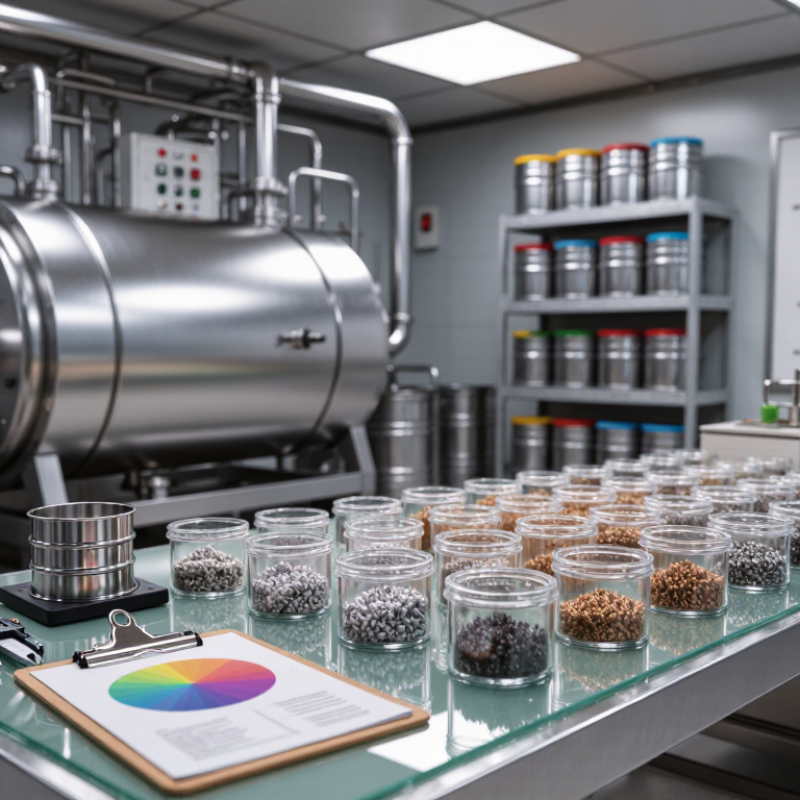
What Is Atomized Metal Powder?
Atomized metal powder is produced by breaking molten metal into tiny droplets that solidify during flight. Gas or water jets create this controlled breakup. The cooling rate shapes each particle’s size, surface, and internal structure. In gas atomization, particles are often more spherical and flow easily. Water atomization usually creates more irregular particles with higher surface texture.
Particle size distribution matters greatly. Fine powder can improve detail in additive manufacturing, but it may absorb more oxygen and require careful handling. Coarser powder often flows better, although it can reduce surface resolution. Moisture, oxygen content, tap density, and apparent density should be checked for every production lot. These details influence feeding, packing, sintering, and final mechanical performance.
For global sourcing, atomized powder offers measurable specifications instead of relying only on appearance. A reliable supplier should provide composition data, particle-size analysis, batch traceability, and suitable safety documentation. A certificate alone is not enough. I would also review sampling methods and test conditions before comparing quotations. Powder that looks consistent may still perform differently in production. This is where practical trials matter. No atomized powder is ideal for every process, and selecting it without testing can create expensive surprises.
How Is Atomized Metal Powder Produced?
Atomized metal powder begins with carefully selected feedstock and controlled melting. Operators place the metal in a furnace, where temperature and atmosphere are monitored continuously. The molten stream then passes through a small nozzle.
High-pressure gas or water breaks the stream into droplets. Gas atomization usually creates rounded particles with smoother surfaces. Water atomization cools droplets faster and often produces more irregular shapes. Each method affects flowability, packing density, oxygen content, and final application performance.
The droplets solidify while falling through a cooling chamber. Particle size is not perfectly uniform. Some droplets form satellites or slightly uneven surfaces. That is normal, but it requires attention. The cooled powder is dried when necessary, screened, and separated into specified size ranges. Magnets, sieves, and controlled handling can remove unwanted contamination.
Quality teams examine chemical composition, particle-size distribution, morphology, moisture, and apparent density. They also inspect samples from different production batches, not just one convenient portion. A clean-looking powder can still contain excessive oxygen or fine particles. That is easy to miss without laboratory testing.
Production records should connect furnace conditions, atomizing pressure, cooling behavior, and screening results. Small changes can influence powder flow through a feeder or its behavior during molding. The process demands repeatability, yet perfect uniformity remains unrealistic. Reliable sourcing depends on measured consistency, clear documentation, and honest review of process limitations.
Why Choose Atomized Metal Powder for Global Sourcing?
How Is Atomized Metal Powder Produced?
Atomized metal powder is produced by melting metal and breaking the liquid stream into droplets with high-pressure gas, water, plasma, or centrifugal force. The droplets rapidly solidify into powder particles. The chart shows indicative industrial particle-size ranges commonly associated with each atomization route; actual results vary with alloy composition, nozzle design, pressure, temperature, and classification.
Which Properties Support Its Industrial Use?
Atomized metal powder earns industrial attention through controllable physical and chemical properties. Its particles form when molten metal breaks into fine droplets and rapidly solidifies. This process can create spherical particles with smoother surfaces. They usually flow more consistently through hoppers, feeders, and automated deposition systems.
Particle size distribution directly affects packing density, spreading behavior, and sintering performance. Fine particles may improve surface detail, but they can increase dust and handling concerns. Coarser particles often flow better, yet they may reduce resolution in precision applications. There is no perfect range. Engineers must match powder size to equipment, layer thickness, and final geometry.
Chemical consistency is equally important for industrial reliability. Stable alloy composition supports repeatable strength, hardness, conductivity, and corrosion resistance. Low oxygen and moisture levels can reduce unwanted reactions during heating. Apparent density, tap density, and flow-rate testing reveal how powder may behave in production. These values are useful, but they do not replace trials on the actual machine.
For global sourcing, batch records, test certificates, and traceability deserve close review. Reliable documentation helps compare suppliers across regions and supports process control. Packaging also matters. Sealed containers can protect powder from humidity and contamination during long transport. Still, shipping conditions may vary, and laboratory results cannot predict every production issue. Small pilot batches often expose problems before full-scale purchasing.
Why Is It Suitable for Global Sourcing?
Why Choose Atomized Metal Powder for Global Sourcing?
Atomized metal powder suits global sourcing because its production can be measured and repeated. Gas and water atomization create controlled particle shapes for different processing routes. Suppliers can specify chemistry, particle-size distribution, flow rate, and apparent density. These details support clearer comparisons between regions and production sites. Less guesswork helps procurement teams.
Demand is also becoming more international. The Wohlers Report 2024 valued the additive manufacturing industry at approximately 20.0 billion dollars in 2023, with 13.5% annual growth. That expansion increases the need for stable powder supply and documented quality control. The World Steel Association reported global crude steel production of about 1.89 billion tonnes in 2023. This broad industrial base supports access to common alloy families, including stainless steel, tool steel, and nickel alloys.
Traceability matters here. Each batch should include test records, lot numbers, moisture checks, and particle-size results. ISO and ASTM-based procedures make technical communication easier across borders. In practice, a sealed powder container, a clear certificate, and a defined inspection plan can prevent costly delays.
Still, atomized powder is not automatically consistent. Satellite particles, oxygen pickup, or poor storage can affect flowability. Transport conditions may also change performance. This is where sourcing teams need practical audits, not only attractive certificates. The data helps, but it does not replace sampling. A small trial batch may reveal problems that a polished specification hides.
How Should Buyers Evaluate Suppliers and Quality?
Why Choose Atomized Metal Powder for Global Sourcing?
How Should Buyers Evaluate Suppliers and Quality?
Atomized metal powder can support consistent production, but supplier evaluation requires more than comparing prices. Buyers should review the atomization method, alloy composition, particle size distribution, and production capacity. Ask for recent certificates of analysis, not only standard templates. A reliable supplier should connect each test result with a clear batch number.
Particle shape matters. Spherical particles often improve flow through feeding systems, while irregular particles may affect packing and surface finish. Check oxygen, moisture, apparent density, tap density, and flow rate when these properties influence your process. Request samples from several production lots. One attractive sample proves very little. Testing only once is a common weakness.
Tips: Build a simple supplier scorecard. Include traceability, laboratory equipment, inspection frequency, packaging, lead time, and response speed. Ask how rejected powder is isolated and documented. Confirm whether testing uses validated methods and calibrated instruments. A factory visit can reveal practical details, such as sealed containers, clean handling areas, and well-labeled storage. Still, appearances can mislead. A tidy warehouse does not guarantee stable powder quality. Keep independent verification in your purchasing plan.

