Why Use Suspension Cell Culture for Bioprocessing?

Why Use Suspension Cell Culture for Bioprocessing?

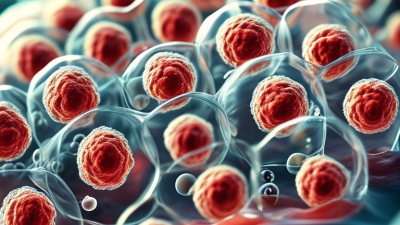
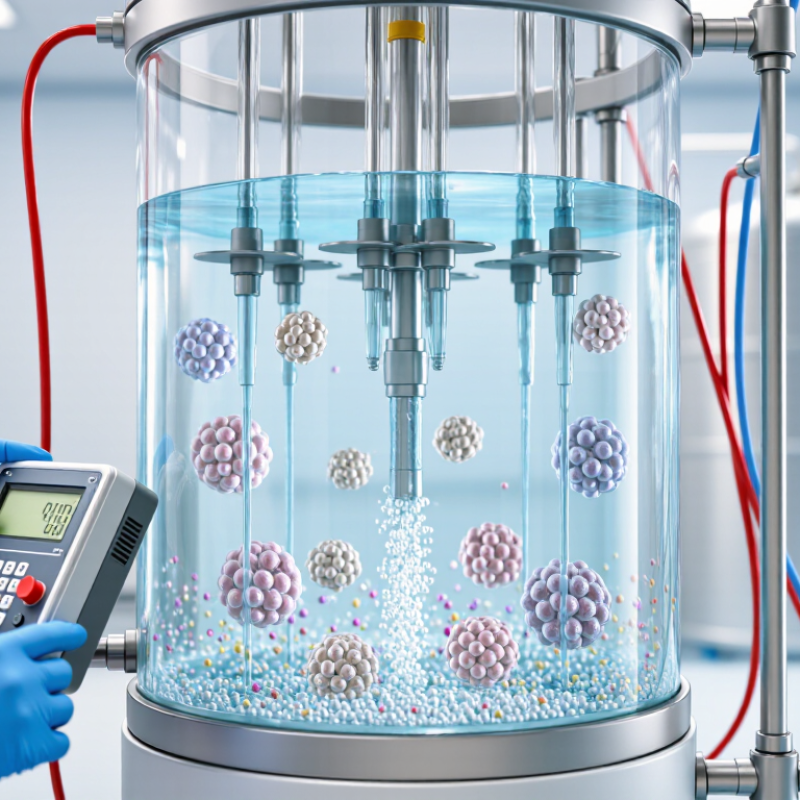
Suspension cell culture allows cells to grow freely in a stirred liquid medium. This format can simplify scale-up, support controlled feeding, and fit common bioreactor designs. In a production suite, the practical details matter: mixing, dissolved oxygen, nutrient delivery, and cell sensitivity must stay within workable ranges. A larger vessel does not guarantee a better process.

The approach is especially useful for many mammalian cell lines adapted to suspension, including CHO cells used to produce biologics. As cell-culture researcher Dr. Florian M. Wurm has contributed extensively to the field, his published work offers useful technical context. I cannot verify a verbatim quotation from him on this specific topic, so I will not attribute invented words to him. A useful editorial framing is: “Suspension culture can make scale-up more manageable, but performance depends on controlling the conditions cells experience.” This is a summary, not a direct quote.

That distinction matters. Suspension culture is not automatically superior to adherent culture. Shear stress, aggregation, and inconsistent mixing can reduce viability or productivity. Careful media selection, gradual adaptation, and monitoring help teams identify problems early. The small details count: a feed schedule, a sampling point, or a change in agitation can alter the culture’s behavior. For bioprocess teams, the central question is whether suspension growth delivers reliable product quality and process control at the intended scale. Sometimes it does. Sometimes the data say otherwise.
Why Use Suspension Cell Culture for Bioprocessing?

What Suspension Cell Culture Means in Bioprocessing

Suspension Cell Culture Means in Bioprocessing

Suspension cell culture means growing cells freely within a liquid medium, rather than attaching them to a surface. Gentle mixing keeps cells evenly distributed and improves access to nutrients. In practice, operators monitor agitation, dissolved oxygen, pH, temperature, and osmolality throughout the run. Small changes matter. A crowded culture can consume glucose quickly and release unwanted metabolites.

This format supports scalable production in stirred-tank bioreactors. Cells can move from shake flasks to larger vessels with fewer physical changes. A 2024 global biopharmaceutical manufacturing survey reported that single-use systems remained widely adopted for flexible production and rapid facility changeover. That trend supports suspension workflows, especially for development teams managing several molecules. However, scale-up is not automatic. Hydrodynamic stress, oxygen transfer, and mixing time can alter cell growth.

Industry data also shows why consistency matters. The 2023 BioPlan bioprocessing survey identified process variability and manufacturing capacity as continuing industry concerns. Suspension cultures offer control, but they do not remove risk. I have seen clean-looking cultures perform poorly after a seemingly minor feeding adjustment. The lesson is uncomfortable: visual density cannot replace reliable analytics. Cell viability, viable cell density, metabolite profiles, and product quality should be reviewed together. Some protocols still depend too heavily on historical settings. That habit deserves challenge.


How Cells Grow in a Suspended Environment

Suspension cell culture allows cells to grow freely within a liquid medium. They do not attach to a flat surface. Instead, gentle mixing keeps them distributed through the vessel. Each cell receives nutrients from the surrounding fluid. Oxygen must also reach the culture evenly.

Small clumps may form during growth. Their size matters. Large clumps can develop oxygen-poor centers, while isolated cells may experience stress. Agitation must balance two needs: uniform mixing and low shear. Too little movement causes settling. Too much movement can damage fragile cells. This balance often requires careful adjustment.

Temperature, pH, dissolved oxygen, and nutrient levels need regular monitoring. Cell density changes quickly, so yesterday’s settings may not suit today’s culture. In practical process development, sampling can reveal problems before the vessel appears abnormal. A culture may look smooth but contain declining viability. That is easy to miss.

Suspension growth can support more consistent expansion than surface-based systems. It also fits vessels with stronger control over mixing and gas transfer. Still, scale-up is not simply a matter of using a larger container. Fluid movement changes with volume. Oxygen transfer may fall. Sampling points may no longer represent the entire culture.

Some assumptions need testing. A healthy small-scale culture does not guarantee a healthy production-scale culture. The cells may adapt slowly, and the process may need more observation than expected.

Why Use Suspension Cell Culture for Bioprocessing? — How Cells Grow in a Suspended Environment
Process Dimension Typical Characteristics in Suspension Culture Bioprocessing Benefit Important Considerations
Cell Growth Environment Cells grow individually or as small aggregates throughout a liquid medium instead of attaching permanently to a solid surface. The culture volume can be used more efficiently, supporting scalable production in stirred or rocking vessels. Aggregate size and cell distribution must be controlled because excessive clumping can limit nutrient and oxygen access.
Scalability The same basic culture principle can be transferred from small shake flasks to laboratory, pilot, and manufacturing-scale bioreactors. Scale-up is based mainly on liquid volume and process parameters rather than adding large areas of growth surface. Mixing time, oxygen transfer, heat removal, and hydrodynamic stress can change as vessel size increases.
Nutrient and Gas Transfer Agitation and sparging help distribute nutrients and remove carbon dioxide while supplying dissolved oxygen. A controlled liquid environment can provide relatively uniform access to nutrients, pH control, and dissolved gases. Higher agitation or aeration may improve mass transfer but can also increase foaming and shear exposure.
Typical Cell Density Many mammalian suspension processes operate in the range of approximately 1 × 10⁶ to 2 × 10⁷ viable cells per milliliter, depending on the cell type and process design. High viable cell concentrations can increase volumetric productivity and reduce the culture volume needed for a target output. The achievable density depends on nutrient availability, waste accumulation, osmolality, oxygen transfer, and cell-specific metabolism.
Monitoring and Control Key variables commonly include viable cell density, viability, pH, dissolved oxygen, temperature, glucose, lactate, ammonia, and osmolality. Online and offline measurements support tighter control of cell growth and product formation. Sampling and sensor readings should be representative of the whole vessel, especially when aggregates or gradients are present.
Shear Sensitivity Cells may be exposed to forces generated by impellers, gas bubbles, pumps, and liquid handling operations. Appropriate impeller selection, moderate agitation, and optimized aeration can provide mixing without excessive damage. Mammalian cells are generally more shear-sensitive than many microbial cells; bubble formation and bursting can be particularly important.
Process Duration Batch and fed-batch cultures commonly run for several days to a few weeks, depending on the cell line and product. Fed-batch operation can extend the productive phase by supplying nutrients and controlling the accumulation of selected by-products. Longer runs require strong contamination control and close monitoring of viability, osmolality, and product quality.
Productivity Product formation may be growth-associated, non-growth-associated, or a combination of both, depending on the biological system. Suspension systems can support high volumetric productivity when cell density, viability, and specific production rate are well balanced. Maximizing cell density alone does not always maximize product quality or final yield.
Media Strategy Processes may use chemically defined or serum-reduced media formulated for suspension growth and controlled metabolism. Defined media can improve process consistency and simplify downstream impurity characterization. Media selection affects growth rate, protein expression, glycosylation, osmolality, and total process cost.
Common Bioprocessing Uses Suspension culture is widely used for recombinant proteins, viral vectors, vaccines, cell-derived products, and some stem-cell processes. The format is compatible with closed, monitored, and automated manufacturing workflows. The preferred culture mode depends on cell biology, product requirements, regulatory expectations, and downstream processing needs.
Overall Advantage Cells are distributed in a controllable liquid phase, allowing growth conditions to be adjusted through mixing, feeding, aeration, and temperature control. Suspension culture combines operational flexibility with a clear path toward larger-scale production. Successful implementation requires simultaneous optimization of biology, equipment, process control, and product quality attributes.

How Suspension Culture Enables Production at Scale

Suspension cell culture enables production at scale because cells grow freely throughout a liquid medium. This removes the need for large attachment surfaces. In stirred bioreactors, teams can increase volume using familiar process controls. A 10-liter vessel may follow the same operating logic as a 1,000-liter vessel. Scale-up is not automatic, though.

Engineers monitor agitation, dissolved oxygen, pH, temperature, and nutrient levels throughout the run. Small changes can affect cell growth and product quality. Gentle mixing helps distribute oxygen without creating excessive shear.

Feeding strategies can also extend culture duration and improve output. Sensors provide continuous data, while regular sampling confirms what instruments cannot fully reveal.

Practical control matters.

Suspension systems can support batch, fed-batch, and continuous processing approaches. They also reduce manual handling compared with many surface-dependent cultures. However, larger vessels change fluid movement, oxygen transfer, and heat behavior. A process that performs well in a laboratory flask may become unstable at production scale. That gap requires controlled studies, repeated measurements, and honest review of failed runs. Operators should define acceptable ranges before production begins, not after problems appear. Even then, some variability remains, especially when cells respond differently after extended culture.

Which Bioprocess Conditions Require Careful Control

Why Use Suspension Cell Culture for Bioprocessing?

Suspension culture supports scalable, closed, and highly consistent bioprocessing. Cells grow freely in stirred vessels, allowing better mixing and oxygen transfer. However, scale-up is not simply “make the tank larger.” The 2024 BioPlan Associates biomanufacturing report continues to identify process consistency, contamination control, and manufacturing capacity as major industry concerns.

Which Bioprocess Conditions Require Careful Control?

pH, dissolved oxygen, temperature, osmolality, agitation, and nutrient levels require continuous attention. Many mammalian processes operate near 36–37°C, with dissolved oxygen commonly maintained around 30–60% air saturation. Small pH shifts can change cell metabolism, lactate formation, and product quality. Excessive agitation may damage fragile cells, while poor mixing creates hidden nutrient gradients. The FDA Process Validation Guidance recommends ongoing process monitoring, not one-time qualification. ICH Q8(R2) also supports linking critical process parameters with critical quality attributes. These principles sound clean on paper. Real cultures are less cooperative.

Tips: Set alarms before values reach failure limits. Compare online sensors with offline samples. Track viable cell density, viability, glucose, lactate, and osmolality together. A single reading can mislead. Review trends by vessel location and sampling time, especially during inoculation and late-stage feeding. BioPlan’s 2024 survey also highlights the growing need for workforce expertise and digital process control, yet automation cannot replace sound sampling decisions. One overlooked sample may explain an entire failed run.

Where Suspension Culture Fits Among Production Methods

Suspension culture fits bioprocessing when scalable, controlled growth matters more than attachment. Unlike adherent cells, suspension cells grow freely in liquid media. This reduces dependence on surface area and simplifies expansion from small vessels to production bioreactors. Operators can monitor pH, dissolved oxygen, temperature, and cell density during each stage. That visibility supports consistent process decisions.

The choice still depends on the product and cell line. Adherent culture may suit cells that lose function when detached. Microbial fermentation can offer faster growth, while suspension mammalian cultures often support complex proteins. In practice, suspension systems require careful mixing and oxygen transfer. Excessive agitation can damage fragile cells. Poor mixing can create nutrient gradients inside the vessel. I have seen small changes in cell density alter feeding decisions more than expected. The process is powerful, but not automatically simple.

Tips: Begin with a robust seed-train plan. Track viable cell density, aggregate size, and metabolite trends, not only total cell counts. Test mixing at production-like conditions before scale-up. A clear vessel does not always mean a healthy culture. Keep sampling consistent, because irregular sampling can hide gradual stress. It is also worth challenging your assumptions: a high growth rate may not indicate the best product quality. Suspension culture fits best where process control, scale, and product requirements align.

chevron-down