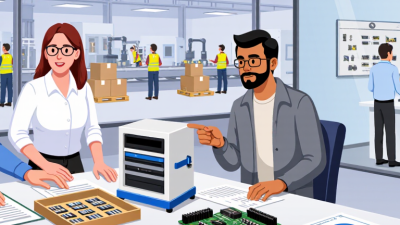
Demand for suspension cells is rising with biopharmaceutical development, vaccine production, and scalable research workflows. Cell culture remains a core platform for modern biologics manufacturing.
Fortune Business Insights reports sustained growth in the global cell culture market through 2032. MarketsandMarkets also identifies bioprocessing expansion as a major demand driver. These reports cover broader cell culture categories, however. They do not measure every suspension cell supplier equally.
China has become an important sourcing base for global buyers. Its suppliers offer catalog cell lines, customized adaptation, cryopreserved products, and technical support. Yet supplier quality can vary significantly. That matters.
This guide reviews China’s top 10 suspension cell suppliers through practical purchasing criteria. The assessment considers product authentication, viability data, passage history, contamination testing, lot consistency, and documentation quality. It also examines ISO systems, GMP-related capabilities, export experience, and response speed.
A reliable supplier should provide clear certificates of analysis. Buyers should request mycoplasma results, recommended culture media, thawing instructions, and storage requirements. For industrial users, scale-up performance deserves equal attention. A cell line that performs well in a flask may behave differently in a stirred tank.
Public information is not always complete. No list is perfect. Company rankings can change as certifications, facilities, and product portfolios develop. Therefore, this article should support supplier screening, not replace technical qualification.
Global buyers should compare evidence, not promotional claims. Small details matter, including label accuracy, cold-chain packaging, and batch traceability. The following selection offers a practical starting point for identifying dependable Chinese suspension cell partners.

A suspension cell grows freely in liquid culture instead of attaching to a surface. This feature supports scalable production in stirred-tank bioreactors. Cells can be monitored through pH, dissolved oxygen, agitation, and nutrient levels. That sounds simple. It is not.
Grand View Research estimated the global biopharmaceuticals market at about USD 516.8 billion in 2023. This expansion increases demand for reliable suspension-cell inputs and technical support. BioPlan Associates’ 2024 industry report also found that biomanufacturers continue investing in single-use systems and process capacity. These trends make supplier selection a technical decision, not merely a purchasing exercise. Buyers should examine cell-line documentation, passage history, authentication methods, contamination controls, and shipping stability. A supplier should provide traceable batch records and clear recovery instructions. Cold-chain performance matters when a vial arrives after a long international journey. One small temperature failure can damage months of development work.
Cost comparisons can mislead. A cheaper vial may require extra adaptation, testing, or repeated experiments. Experienced teams should request performance data in the intended medium and bioreactor format. Support quality matters too, especially during scale-up or unexpected growth changes. However, no supplier can remove every biological variation. That limitation deserves honest discussion. Buyers should compare evidence, not polished promises. Calibration, documentation, and responsive technical communication often separate a usable supplier from a risky one.
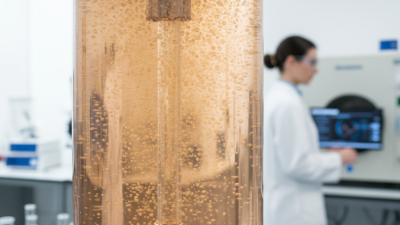
When evaluating China-based suspension cell suppliers, buyers should test more than catalog specifications. The IEA reported that global battery demand exceeded 750 GWh in 2023, rising about 40% year on year. This growth increases pressure on production consistency. Request batch-level data for capacity, resistance, cycle life, and temperature performance. One sample is never enough.
Quality systems matter. Check ISO 9001 controls, incoming-material inspection, process records, and corrective-action procedures. Ask whether the supplier can provide serial-level traceability, not only a general certificate. The IEA’s 2024 battery supply-chain analysis estimated that China produced around 80% of global battery cells. Scale is valuable, but scale alone does not prove stable quality. Factory audits should include mixing, coating, assembly, formation, and final inspection areas.
Global buyers should also compare warranty terms, testing standards, export experience, and response times for technical failures. Independent laboratory testing can verify supplier claims under realistic temperature and load conditions. This step costs more, yet it may prevent expensive field returns. Price comparisons can mislead. A cheaper cell may require extra inspection, packaging, or redesign work. Suppliers should disclose production capacity and expansion plans clearly. Forecasts are not delivery commitments. Some assessments remain uncertain because reported capacity may exceed practical output. That detail deserves careful questioning.
China’s top ten suspension cell suppliers should be compared by product design and manufacturing capability, not shipment volume alone. The IEA’s Global EV Outlook 2024 reports that China produced nearly 80% of global battery cells in 2023. This scale supports competitive pricing, faster tooling, and broad material access. However, capacity does not guarantee consistent quality.
A practical shortlist should separate suppliers by cell format, chemistry, and application. Prismatic lithium iron phosphate cells offer strong thermal stability and cost control. Nickel-based cells provide higher energy density for weight-sensitive systems. Cylindrical and pouch formats may suit different suspension-cell layouts. BloombergNEF reported an average global battery-pack price of 115 dollars per kilowatt-hour in 2024, while Chinese pack prices were lower. Cost matters, but dimensional tolerance, vibration testing, cycle life, and thermal control matter more in real installations. Ask each supplier for formation records, batch traceability, inspection standards, and independent test results. Request samples from several production lots.
The strongest suppliers usually combine automated welding, laboratory validation, and flexible engineering support. Some can adjust terminal design, casing dimensions, or protection settings for specific platforms. Yet reported cycle figures often come from controlled laboratory conditions. They may not reflect dust, vibration, cold starts, or long storage. No ranking is perfect. Supplier audits and pilot testing remain necessary before volume purchasing.
China’s Top 10 Suspension Cell Suppliers by Product and Capability
The chart compares commonly disclosed product and service capabilities across China-based suspension-cell suppliers. Suspension-adapted CHO, HEK293, insect, Vero, BHK and hybridoma systems are widely used in biopharmaceutical research and manufacturing. Scores represent capability coverage across the reviewed supplier segment rather than company-specific sales or market share.
China Top 10 Suspension Cell Suppliers for Global Buyers
Quality should lead every supplier comparison. Grand View Research valued the global cell culture market at about US$4.7 billion in 2023. It also projects strong growth through 2030. This demand increases pressure on suspension cell suppliers to prove consistency, not just offer low prices. Buyers should request lot-specific CoAs, mycoplasma results, sterility records, passage history, and traceability documents. ISO 9001 systems help, but they do not replace GMP-aligned controls. A certificate is not proof of performance.
Customization matters when cells enter real development workflows. Suppliers may adapt suspension cells to serum-free or chemically defined media. They can also adjust vial formats, viable cell density, passage limits, and packaging. Ask for recovery data after thawing. Ask for growth curves, too. These details expose weak claims. The 2024 BioPlan Associates industry survey continues to identify supply reliability and documentation as major bioprocessing concerns. That matches practical purchasing experience. Some suppliers respond quickly before shipment, then become slow when technical questions appear. Buyers should test communication early.
Export support can determine whether a valuable shipment arrives usable. Reliable teams provide commercial invoices, packing lists, HS classifications, temperature records, and clear Incoterms. Cold-chain plans should include contingency handling and delivery monitoring. Regional regulatory expectations may also differ. A competent supplier explains the limits of its documents. That honesty matters. No supplier gets every detail perfect, and buyers should review transport assumptions before placing large orders.
| No. | Supplier Profile | Core Product Focus | Typical Capacity Range | Quality Standards & Controls | Customization Options | Sample Lead Time | Production Lead Time | Export Support |
|---|---|---|---|---|---|---|---|---|
| 01 | Profile A | Standard automotive suspension cell assemblies | Small to medium batch production; approximately 500–5,000 units/month | ISO 9001-based quality management, incoming inspection, dimensional checks, leak testing, traceability records | Dimensions, mounting points, materials, surface finish, labeling, packaging | 7–15 working days | 30–45 working days | Commercial invoice, packing list, certificate of origin, export carton optimization |
| 02 | Profile B | High-load and heavy-duty suspension components | Medium batch production; approximately 1,000–8,000 units/month | Material certificates, tensile-strength verification, weld inspection, load testing, batch identification | Load rating, steel grade, reinforcement design, bracket geometry, corrosion protection | 10–20 working days | 35–55 working days | Container loading plans, freight-forwarder coordination, palletized export packing |
| 03 | Profile C | Precision suspension cell housings and machined parts | Prototype to medium volume; approximately 100–3,000 units/month | CNC inspection, coordinate measurement, surface-roughness testing, first-article inspection reports | CAD-based design, tolerances, alloys, anodizing, plating, laser marking | 5–12 working days | 25–40 working days | English technical documentation, HS-code assistance, courier and air-freight support |
| 04 | Profile D | Rubber-metal suspension cell assemblies | Medium to high volume; approximately 5,000–30,000 units/month | Rubber hardness testing, bond-strength checks, aging tests, visual inspection, production traceability | Rubber compound, hardness, bonding method, geometry, temperature range, packaging | 15–25 working days | 45–65 working days | Export labeling, moisture-resistant packing, recurring-order scheduling |
| 05 | Profile E | Commercial vehicle and fleet suspension solutions | High-volume capability; approximately 10,000–50,000 units/month | Process control plans, destructive sampling, fatigue testing, supplier audits, corrective-action procedures | Vehicle platform fit, load class, service life, coating system, identification marks | 15–30 working days | 45–75 working days | Container consolidation, scheduled shipments, documentation review and after-sales coordination |
| 06 | Profile F | Low-temperature and corrosion-resistant suspension parts | Small to medium batch production; approximately 500–6,000 units/month | Salt-spray testing, coating-thickness measurement, low-temperature testing, dimensional inspection | Material selection, protective coating, sealing, operating temperature, anti-corrosion treatment | 10–20 working days | 35–60 working days | Export-grade corrosion protection, regional compliance document support, sea-freight packing |
| 07 | Profile G | Aftermarket replacement suspension cell products | High-mix production; approximately 2,000–20,000 units/month | Incoming material inspection, fitment verification, functional testing, lot control, final visual inspection | Private labeling, kit configuration, barcode labels, multilingual instructions, packaging design | 7–18 working days | 30–50 working days | Mixed-SKU packing, barcode documentation, distributor-ready cartons, small-order consolidation |
| 08 | Profile H | Electric and hybrid vehicle suspension components | Prototype to medium volume; approximately 300–8,000 units/month | Dimensional capability studies, fatigue testing, material traceability, functional validation, change control | Weight reduction, aluminum or high-strength steel options, sensor provisions, noise and vibration tuning | 15–30 working days | 50–80 working days | Technical file preparation, dangerous-goods screening where applicable, air and sea logistics support |
| 09 | Profile I | Custom-engineered motorsport and performance parts | Prototype and low-volume production; approximately 50–1,500 units/month | Advanced dimensional inspection, material certificates, fatigue analysis, prototype validation, engineering sign-off | Lightweight alloys, bespoke geometry, anodizing, coating, engraving, performance specifications | 10–25 working days | 35–70 working days | Engineering communication in English, export crating, express shipment and customs-document support |
| 10 | Profile J | Integrated suspension cell systems and OEM programs | Large-scale production; approximately 20,000–100,000 units/month | Automotive-style APQP, PPAP documentation, process audits, capability studies, end-of-line testing, full traceability | Complete design-to-production support, tooling, validation plans, packaging engineering, engineering changes | 20–35 working days | 60–90 working days | Long-term supply planning, container booking, export compliance files, warranty and claims coordination |
Global buyers evaluating China’s top suspension cell suppliers should look beyond catalog size and low pricing. Product consistency matters more than impressive brochures. Ask for cell origin, passage history, growth data, contamination testing, and storage conditions. A reliable supplier should provide clear certificates, batch records, and technical support. Request recent test reports, not general claims. An experienced buyer should also compare response times and documentation quality before placing a large order.
Tips: Start with a small, documented trial order. Confirm packaging, temperature monitoring, delivery timelines, and replacement policies. Check whether the supplier understands your destination country’s import and biosafety requirements. Keep every specification in writing. Verbal promises are difficult to verify later.
A useful supplier should welcome a remote factory audit or an independent inspection. During discussions, ask how deviations are investigated and recorded. Strong quality systems usually show evidence, not confidence alone. However, no supplier is perfect. Some documents may arrive late, and technical replies may need clarification. That is worth noticing, not ignoring. Review communication with your laboratory team, then assess whether the supplier can support repeated orders with stable performance. Also examine payment terms, production capacity, and contingency plans before signing a long-term agreement.